

Germanic


 1
6.2
1
6.2
- noun
- /ˈdʒɜrmænɪk/
- Specialized
- Other evidence for an older Odin cult comes from the weekday names in old Germanic.
Loading YouTube…
Watch on YouTubeYour name means Daddy in all Germanic.
- Your name means Daddy in all Germanic.
Examples
-
Most northern European archaeologists agree that Jastorf (2,600 ya) was early Germanic, with the preceding Bronze Age (starting 3,800 ya) the formative time that made this IE Germanic.
Blog text (11) -
I'm trying to read Old English and Germanic.
-
So I know him from the German group there and my degree was in Germanic history and philology actually.
-
As we have learned from Marx, it fell because it was invaded by Germanic tribes.
-
Well, let's say Germanic; the Anglo-Saxons are a part of it, as are Scandinavians and Dutch, too.
Academic text (2016) -
Rome fell because Germanic tribes overcame its frontier defenses.
-
Erudite Dutch viewers might recall the etymology of lanskop and it's Old English, Germanic and Norse variations.
-
Most northern European archaeologists agree that Jastorf (2,600 ya) was early Germanic, with the preceding Bronze Age (starting 3,800 ya) the formative time that made this IE Germanic.
Blog text (11) -
The study of Germanic languages reveals important connections between English and its linguistic ancestors.
-
Many modern words in English are derived from Germanic roots, highlighting its influence on the language.
Synonyms
 1
6.0
1
6.0
A group of languages like English, German, Dutch, and Swedish
Compounds

- Specialized
A group of old languages like Gothic once used in eastern Europe and no longer spoken

- Specialized
Languages from the Germanic family once spoken in Eastern Europe, for example Gothic, and now no longer spoken
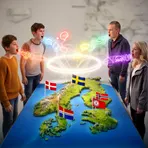
- Specialized
A group of languages spoken in Denmark, Sweden, Norway, Iceland, and the Faroe Islands


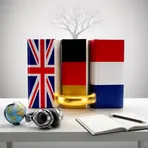
Surface Forms
Etymology
As a noun, Germanic names the family of languages that came from the people the Romans called Germani, so it means 'languages of the German people' such as English, German, and Dutch. This is why we say English is a Germanic language.