
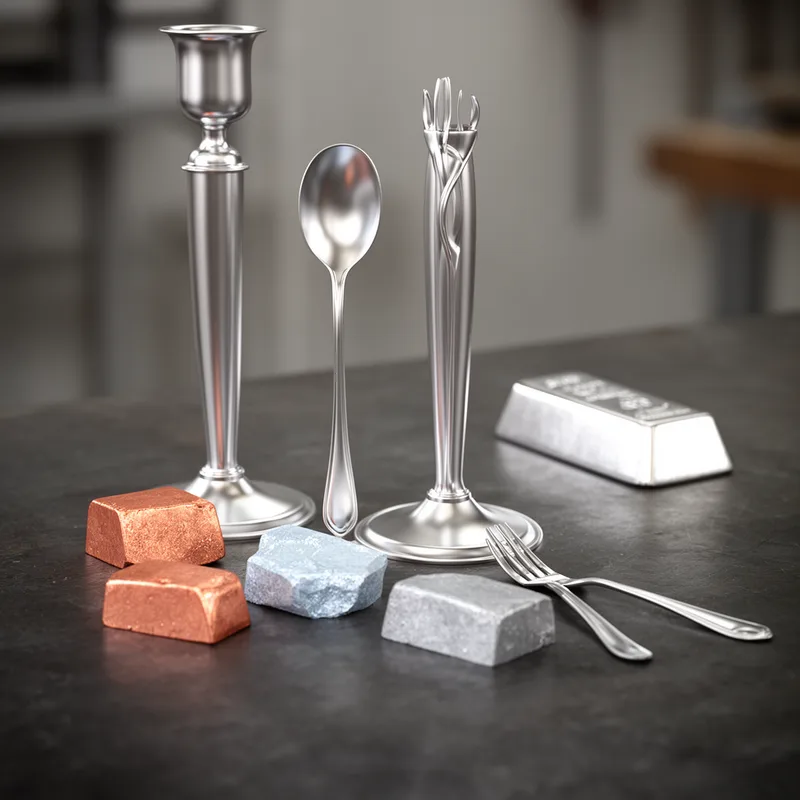
German silver
- noun
- /ˈɡɜrmən ˈsɪlvər/
- Specialized
- All dancers wear mescal bean or German silver bead bandoliers draped over the left shoulder.
Examples
-
Some wear German silver armbands as well.
Academic text (1994) -
A black bear wearing a dress decorated with small mirrors and German silver would pirouette when she heard the rattle of a quarter inside her locked tin box.
Fiction book (1998) -
Many jewelry makers use German silver for crafting affordable yet stylish pieces.
-
The trophy was beautifully crafted from German silver, making it shine brightly at the award ceremony.
-
Her collection includes various utensils made from German silver, known for its durability and attractive appearance.
Synonyms
A metal made from copper, nickel, and zinc that looks like silver and is used for knives and forks
Surface Forms
Morphology
German + silver
A B1 learner who knows 'German' and 'silver' will likely infer a literal meaning (silver from Germany or a type of silver metal) because the compound looks compositional. However, the conventional meaning is a specific silver‑coloured alloy that contains no actual silver, so the intended sense (an alloy rather than the metal) is not fully predictable from the parts.
Etymology
German silver comes from a simple image: makers in Germany created a metal that looked like real silver. They mixed copper, nickel and zinc to make a bright, silvery metal 'without real silver', so German points to where it came from and silver describes how it looks.

