
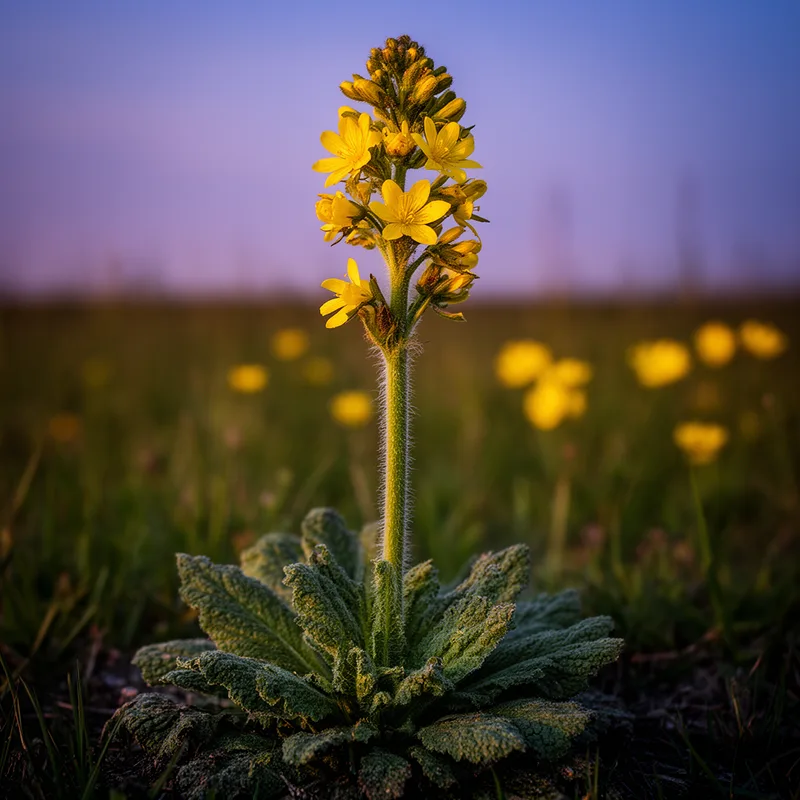
German rampion
- noun
- US
- She identified the plant as a German rampion by its distinctive evening-blooming flowers.
Examples
-
The wild German rampion has become common in several parts of Europe.
-
The German rampion blooms beautifully in the garden.
-
In late summer, German rampion flowers add a yellow glow to the meadows.
-
Have you seen the German rampion in bloom?
-
In late summer, German rampion flowers add a yellow glow to the meadows.
-
The wild German rampion has become common in several parts of Europe.
-
She identified the plant as a German rampion by its distinctive evening-blooming flowers.
Synonyms

A tall plant that lives for two years and has yellow flowers that open in the evening

A plant with yellow flowers that open in the evening and attract moths
Surface Forms
Morphology
German + rampion
The phrase is a straightforward adjective + noun combination: 'German' denotes origin or association with Germany and 'rampion' is a plant, so 'German rampion' clearly means the rampion associated with or from Germany. This compositional pattern is common cross-linguistically, so a B1 learner who knows the two constituent words would readily infer the MWE's meaning even if the plant name itself is rare.
Etymology
The name German rampion may come from the old plant word rampion, a root plant a bit like a small turnip, with German added because the plant was common in or thought to come from Germany. So today German rampion simply names the wild yellow plant that blooms in the evening and is found in parts of Europe.

