
German measles
 1
3.0
1
3.0

- noun
- /ˈɡɜrmən ˈmiːzlz/
- Specialized
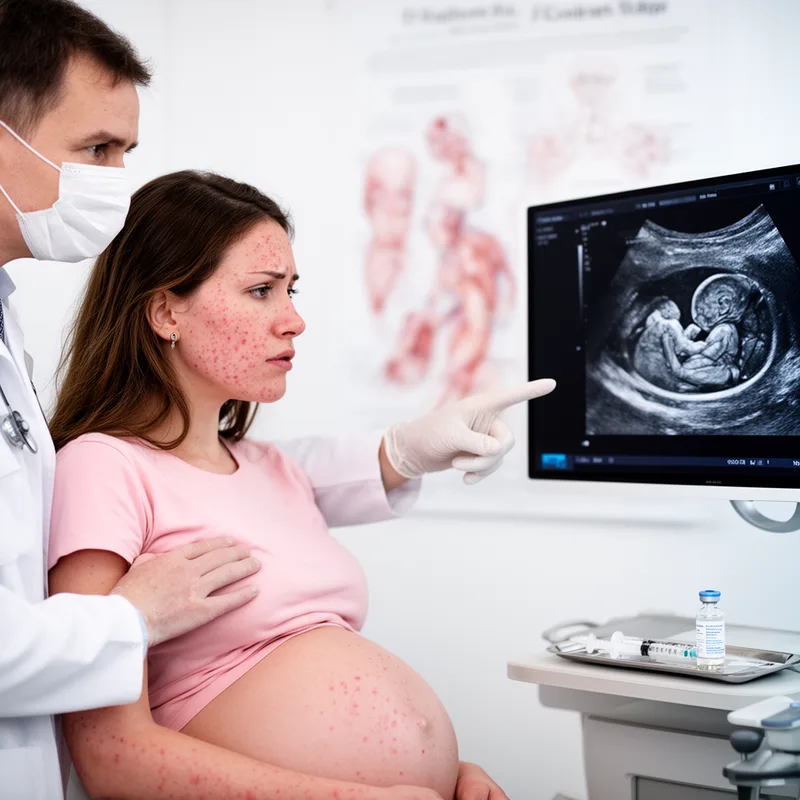
- German measles, also known as German measles, can be particularly dangerous for pregnant women since it may harm the developing fetus.
- German measles, or rubella
Examples
-
Vaccination against German measles is essential to prevent outbreaks and protect vulnerable populations, especially pregnant women.
-
My mother somehow contracted German measles while she was pregnant with him, and he was born legally blind, severely hearing impaired (almost deaf by the time he died), severely developmentally delayed, with a cleft palate.
Blog text (19) -
Can I help it if she caught the German measles?
-
German measles once.
-
German measles!
-
The symptoms of German measles typically include a mild fever, rash, and swollen glands that last for about three days.
Synonyms
 5
6.3
5
6.3
A contagious viral illness causing a mild rash and fever that can harm a baby in early pregnancy

A mild illness caused by a virus that gives a rash and can harm an unborn baby in early pregnancy

A contagious viral illness that causes a short fever and rash and can harm an unborn baby early in pregnancy
How Serious

Surface Forms
Morphology
The compound is compositionally built: 'measles' clearly signals a viral disease and 'German' simply modifies it as a particular type or variant, so a B1 learner who knows both words will infer it refers to a measles-like illness associated with Germany. While finer medical facts (that it is rubella and milder, with fetal risk) are not deducible from the words, the basic sense 'a kind of measles' is directly derivable, making it transparent.
Etymology
German measles may come from doctors in Germany in the 1800s who first described this mild illness and showed it was different from ordinary measles. Because English speakers used their reports, the name stuck, even though doctors also call it rubella, from Latin meaning 'little red'.