

Gallipoli Campaign


 1
9.7
1
9.7
- noun
- /ɡəˈlɪpəli kæmˈpeɪn/
- The 1915 Gallipoli Campaign was a significant military operation that aimed to secure a path to Russia during World War I.
Examples
-
And we've already got the Russian Civil War, the Gallipoli campaign, which was the biggest of them.
-
Beckett also muses on such well-known events as the 1915 Gallipoli campaign and the 1917 abdication of Russia's Tsar Nicholas II.
Blog text (7) -
Many historians argue that the Gallipoli Campaign marked a pivotal moment in the relationship between the Allied forces and their military strategies.
-
The failure of the Gallipoli Campaign resulted in heavy casualties and lasting impacts on the tactics used in World War I.
Synonyms
 1
9.1
1
9.1
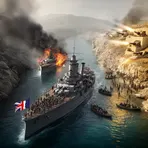
A failed 1915 World War I attack by British and French forces to capture the Dardanelles sea passage

A failed 1915 Allied attack that tried to take the Dardanelles Strait to open a sea route to Russia
Surface Forms
Morphology
Gallipoli + campaign
The noun 'campaign' transparently signals a planned military or political operation, so a learner who knows the words would infer it refers to an organized operation associated with 'Gallipoli'. However, 'Gallipoli' is a specific place-name and the detailed historical sense (WWI, unsuccessful landing, Ottoman defence) cannot be derived from the constituents alone, so the meaning is only partially accessible without background knowledge.
Etymology
The Gallipoli Campaign is named after the Gallipoli peninsula, a narrow piece of land by the sea where Allied ships and soldiers tried to land in 1915. The image of troops attacking a thin beach and being stopped by strong Turkish defenders helps explain why the name now suggests a 'failed military attempt' and a heavy loss.