
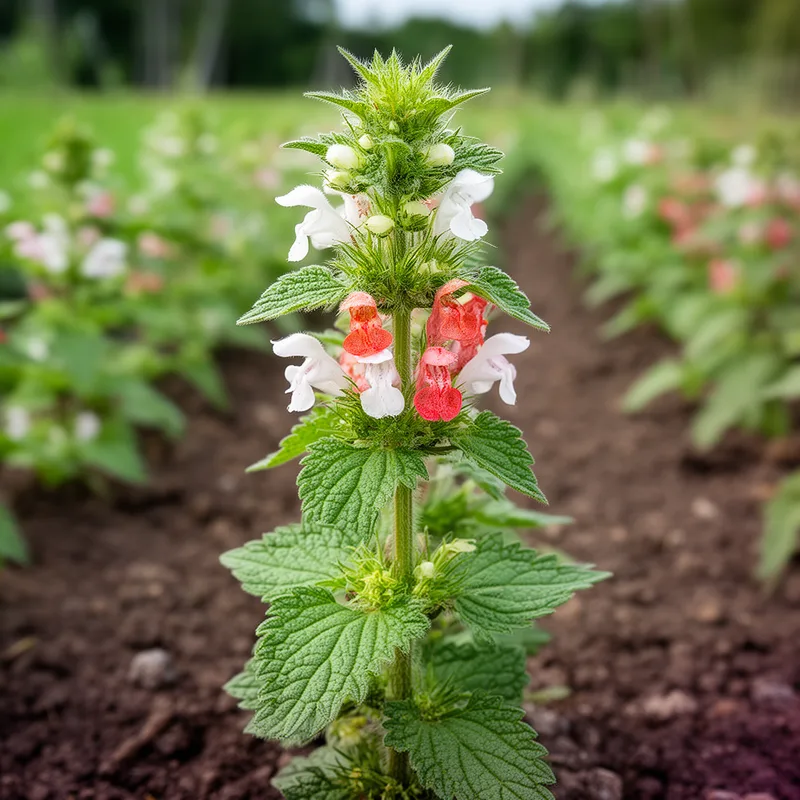
Galeopsis tetrahit
- noun
- Specialized
- Galeopsis tetrahit is commonly found in fields and gardens, often outcompeting native plants.
Examples
-
Children are sometimes wary of Galeopsis tetrahit because its bristly surface can irritate the skin.
-
Botanists studied the spread of Galeopsis tetrahit across local agricultural fields.
-
Galeopsis tetrahit often invades gardens, making it difficult for other plants to thrive.
-
The Galeopsis tetrahit is often mistaken for other weeds.
-
Have you seen any Galeopsis tetrahit in the garden?
-
Farmers are concerned about the presence of Galeopsis tetrahit, as it can disrupt crop growth.
-
The distinctive leaves of Galeopsis tetrahit resemble those of a nettle, which can confuse gardeners.
Synonyms

A rough, hairy plant with white or red flowers that looks like a nettle
Surface Forms
Morphology
Galeopsis + tetrahit
This is a Latin binomial (scientific) name: species epithets function as labels rather than compositional English phrases. Even if a learner knows 'Galeopsis' (hemp-nettle), 'tetrahit' is not a normal English word and gives no predictable meaning, so the specific referent cannot be derived from the constituents by a B1 learner.
Etymology
Galeopsis tetrahit is a Latin name used by scientists. The two parts, Galeopsis and tetrahit, come from old Greek and Latin words that describe the plant's rough, bristly stems and nettle-like leaves, so the name helps people identify this common 'weed'.

