

Fungi imperfecti
- noun
- /ˈfʌŋɡaɪ ɪmˈpɜrfɛkti/
- Archaic
- Many plant diseases are caused by Fungi imperfecti, which lack a known sexual stage.
Examples
-
The classification of Fungi imperfecti has changed as molecular techniques have revealed their relationships.
-
Researchers study Fungi imperfecti to better understand asexual reproduction in fungi.
-
The Fungi imperfecti are fascinating.
-
Did you see the Fungi imperfecti exhibit?
-
Many plant diseases are caused by Fungi imperfecti, which lack a known sexual stage.
-
Researchers study Fungi imperfecti to better understand asexual reproduction in fungi.
-
The classification of Fungi imperfecti has changed as molecular techniques have revealed their relationships.
Synonyms


 1
9.9
1
9.9
A group of fungi with no known sexual stage
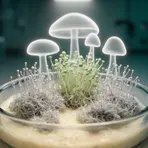
A group of fungi with no known sexual stage

A former group of fungi with no known sexual stage
Surface Forms
Morphology
fungi + imperfecti
The phrase literally reads as 'imperfect fungi' so a learner who knows 'fungi' and the sense of 'imperfect' would get a broad, non-technical idea (fungi that are somehow 'incomplete' or lacking). However, this is a Latin taxonomic label whose precise meaning—fungi for which no sexual reproductive stage has been observed—is a specialized, domain-specific sense that is not directly predictable from the constituents, so the expression is only partially transparent.
Etymology
Fungi imperfecti comes from Latin words Fungi and imperfecti meaning 'imperfect fungi', because scientists had not seen their 'sexual' stage. So the name refers to fungi that are grouped together because they lack a known 'sexual' stage.