
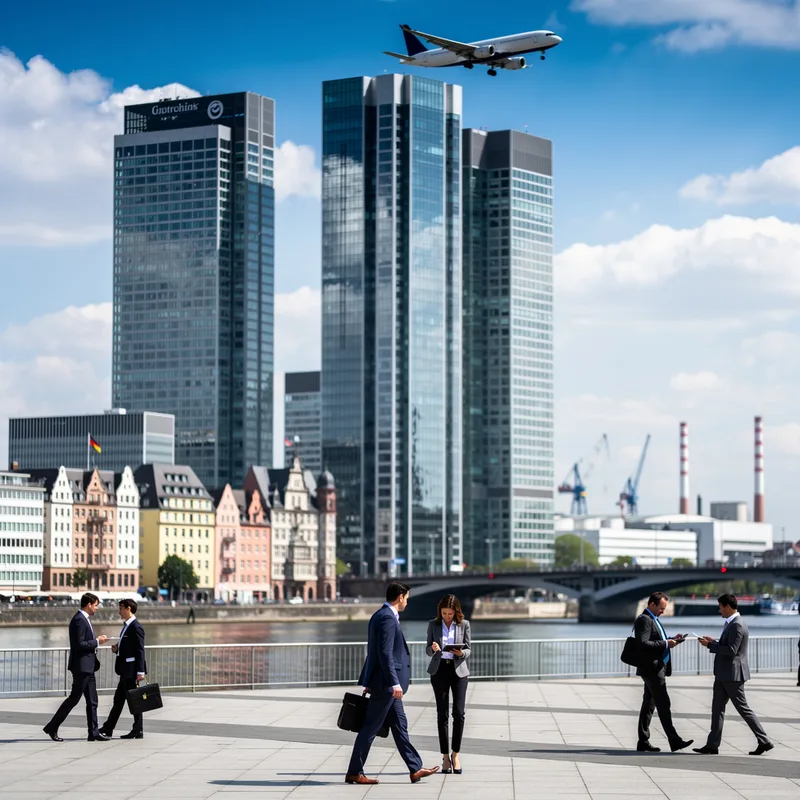
Frankfort
 3
4.9
3
4.9

- proper noun
- /ˈfræŋkfərt/
- Article II of the Treaty of Frankfort (1871) allowed Alsatians only until 1 October of the following year to decide whether they would become German subjects or retain their French citizenship, but in the latter case, they were obliged to relocate on French soil.
- Frankfort, Germany
Examples
-
Frankfort is a major city in Germany known for its Frankfort financial district and vibrant economy.
-
The next morning at dawn, he drove us down the curves of Old Frankfort.
Fiction book (1993) -
David Danzmayr will open his first season as music director of the Illinois Philharmonic Orchestra Saturday night in Frankfort.
Blog text (23) -
American switching yards may be in places like Frankfort, IN, and Meadville, PA, but elsewhere they are nearer to capital or major cities or ports.
Blog text (7) -
Throughout the month of October, you can help support Making Strides Against Breast Cancer by visiting Phillips Chevrolet at 9700 W. Lincoln Highway in Frankfort.
Blog text (3) -
The 32-year-old Austrian maestro opens his debut season as music director of the Illinois Philharmonic Orchestra Saturday night in southwest suburban Frankfort.
Blog text (23) -
Many international companies have their headquarters in Frankfort, Germany.
-
During my visit to Frankfort, I was impressed by the modern skyline and busy trade fairs.
Synonyms
 41
2.5
41
2.5
A large city in central Germany where many banks and companies are
A large city in central Germany that is an important banking and trade centre
Surface Forms
Etymology
Frankfort comes from old parts Frank (the Franks, a people) and furt, an old German word meaning 'ford' or 'a place to cross a river'; just like Oxford is the 'ford for oxen'. So it originally meant 'the Franks' ford', which helps explain why the city grew up at an important river crossing and became a busy trading and financial centre.