
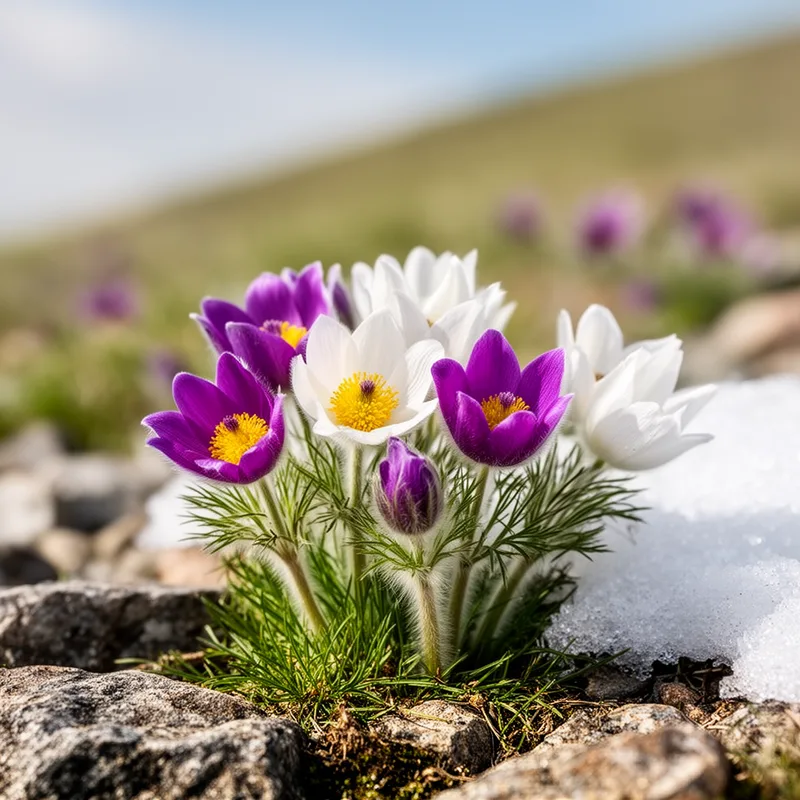
European pasqueflower
- noun
- UK
- The European pasqueflower is among the first blooms to appear in alpine meadows each spring.
Examples
-
Gardeners prize the delicate beauty of the European pasqueflower for early-season color.
-
After the snow melts, clusters of European pasqueflower brighten the rocky slopes.
-
The European pasqueflower blooms beautifully in spring.
-
Many gardeners love the European pasqueflower for its vibrant colors.
-
After the snow melts, clusters of European pasqueflower brighten the rocky slopes.
-
The European pasqueflower is among the first blooms to appear in alpine meadows each spring.
-
Gardeners prize the delicate beauty of the European pasqueflower for early-season color.
Synonyms
A European plant that lives many years with violet or white spring flowers and feathery leaves
A small European plant that grows every year with violet or white flowers in spring

A small plant with bright purple or white flowers that appear in early spring
A small plant that blooms in early spring with purple or white showy flowers
Surface Forms
Morphology
The phrase simply combines the adjective 'European' (from Europe) with the noun 'pasqueflower' (a flowering plant), so the meaning 'a pasqueflower found in Europe' is directly and transparently derivable from its parts. This geographic modifier + noun pattern is common across languages, so a B1 learner who knows both constituents would readily understand it.
Etymology
European pasqueflower comes from the old word pasque, which means 'Easter'. Because the plant's violet or white flower blooms around 'Easter' in early 'spring', the name tells you it is an early spring flower.

