

Anemone pulsatilla
- noun
- UK
- Gardeners often plant Anemone pulsatilla for its delicate spring flowers and feathery foliage.
Examples
-
The Anemone pulsatilla bloomed early this year, bringing a splash of violet to the meadow.
-
The rare white variant of Anemone pulsatilla can sometimes be seen in European alpine regions.
-
The Anemone pulsatilla blooms beautifully in the spring.
-
Many gardeners love the Anemone pulsatilla for its vibrant colors.
-
Gardeners often plant Anemone pulsatilla for its delicate spring flowers and feathery foliage.
-
The Anemone pulsatilla bloomed early this year, bringing a splash of violet to the meadow.
-
The rare white variant of Anemone pulsatilla can sometimes be seen in European alpine regions.
Synonyms

A small European plant that grows every year with violet or white flowers in spring

A small European plant with violet or white flowers that bloom in spring
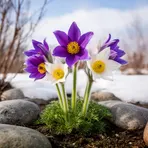
A small plant that blooms in early spring with purple or white showy flowers

A small plant with bright purple or white flowers that appear in early spring
Surface Forms
Morphology
This is a scientific binomial composed of two plant names — 'anemone' (a spring-blooming plant) and 'Pulsatilla' (pasqueflowers) — so it literally names a particular plant species. A B1 learner who knows both constituents can infer it refers to a specific kind of plant (the pasqueflower/anemone), making the meaning directly derivable from the parts.
Etymology
Anemone pulsatilla may come from old Greek and Latin words that describe how the plant moves in spring. The part Anemone means 'wind' and pulsatilla means 'to beat', because the thin petals and fluffy seed heads seem to tremble or 'pulse' in the breeze, so the name helps you remember it as a small, delicate spring flower.

