

Euphorbia antisyphilitica
- noun
- Specialized
- The wax extracted from Euphorbia antisyphilitica is commonly used in the production of cosmetics and candles.
Examples
-
The Euphorbia antisyphilitica is often used to produce candelilla wax.
-
Researchers studied Euphorbia antisyphilitica to find sustainable sources of natural wax.
-
Euphorbia antisyphilitica grows abundantly in the arid regions of Texas and northern Mexico.
-
In Mexico, Euphorbia antisyphilitica thrives in arid conditions.
-
Euphorbia antisyphilitica is a key plant for producing candelilla wax, used in various cosmetics.
-
Farmers in northern Mexico cultivate Euphorbia antisyphilitica for its valuable wax-coated leaves.
-
The candelilla wax obtained from Euphorbia antisyphilitica is a popular ingredient in natural skincare products.
Synonyms
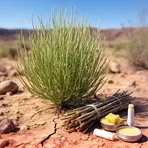
A small shrub from dry regions with waxy stems used to make wax for cosmetics
Surface Forms
Morphology
Euphorbia + antisyphilitica
This is a scientific Latin species name: while 'Euphorbia' signals the plant genus, the second element 'antisyphilitica' is a specialized, Latinized descriptor not found in common dictionaries and not transparent to a B1 learner. The full meaning (a particular wax‑producing shrub) is technical and cannot be derived from the constituents by an average B1 learner, so the term is opaque.
Etymology
Euphorbia antisyphilitica mixes the old name Euphorbia, from an ancient doctor called Euphorbus, and the part antisyphilitica, which suggests people once used it against 'syphilis'. The shrub is coated in a natural wax used for candles and cosmetics, so the name helps you remember this waxy plant known for candelilla wax.

