
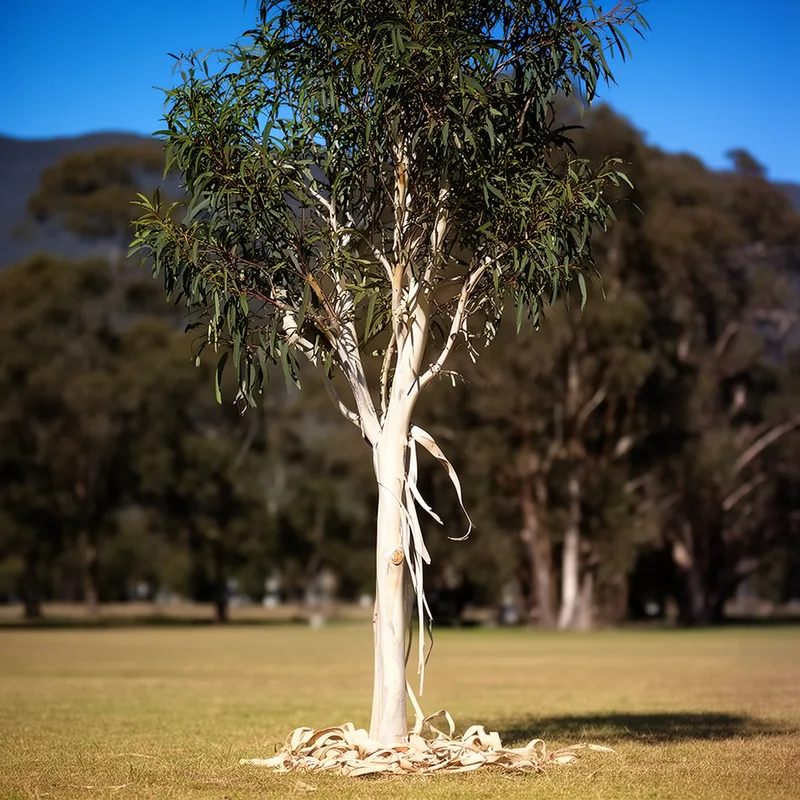
Eucalyptus coriacea
- noun
- Australian
- The park is home to the distinctive Eucalyptus coriacea, easily recognized by its smooth, peeling bark.
Examples
-
The pale trunk of Eucalyptus coriacea contrasts beautifully with the forest's darker foliage.
-
The Eucalyptus coriacea tree is often found in coastal areas.
-
Many gardeners in Tasmania choose Eucalyptus coriacea for its resilience in windy areas.
-
Did you see the Eucalyptus coriacea at the botanical garden?
-
Many gardeners in Tasmania choose Eucalyptus coriacea for its resilience in windy areas.
-
The pale trunk of Eucalyptus coriacea contrasts beautifully with the forest's darker foliage.
-
The park is home to the distinctive Eucalyptus coriacea, easily recognized by its smooth, peeling bark.
Synonyms

A small to medium tree from Australia and Tasmania with smooth white or light-grey peeling bark called snow gum
A small Australian or Tasmanian tree with smooth light coloured bark that peels in strips

A small or medium tree from Australia and Tasmania with smooth pale bark that peels in strips
A small to medium tree from Australia and Tasmania with smooth light-grey bark that peels in strips
Surface Forms
Morphology
eucalyptus + coriacea
This is a Latin binomial (genus + species) rather than a standard English phrase: knowing 'eucalyptus' clearly signals it is a type of tree, but 'coriacea' is not an English word (the dictionary entry is missing) and is a Latin descriptor meaning roughly 'leathery' which B1 learners are unlikely to know. Therefore a learner could infer it is a kind of eucalyptus but would not be able to derive the full descriptive meaning from the constituents without specialist/Latin knowledge.
Etymology
Eucalyptus coriacea comes from two old words: Eucalyptus means 'well-covered' because the flower buds wear a little cap, and coriacea means 'leathery', referring to the tough leaves. So the name gives a simple picture — a capped-bud, leathery-leaf Australian tree, which helps you remember this smooth, peeling-bark species.

