
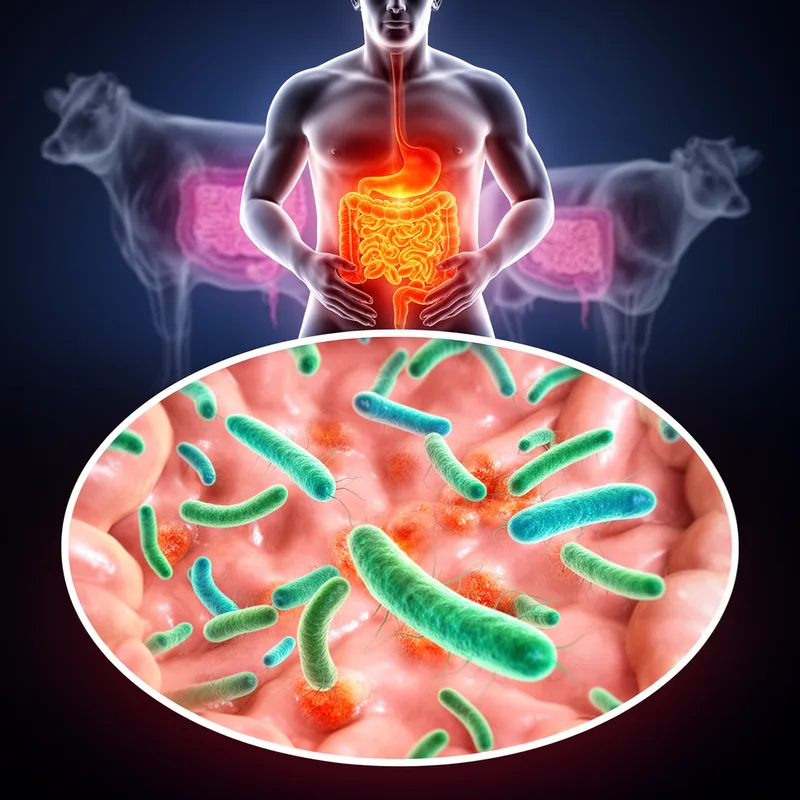
Escherichia coli
 1
4.2

- noun
- /ˌɛʃəˈrɪkiə ˈkoʊlaɪ/
- Specialized
- Subsequent sampling revealed contamination with total and fecal coliform bacteria and Escherichia coli.
- Escherichia coli infection
- Escherichia coli O157
- Escherichia coli O157:H7
Examples
-
Multilocus sequence typing showed extensive genetic diversity among Escherichia coli.
Academic text (2013) -
Health officials warned that some strains of Escherichia coli found in contaminated food can cause serious illness.
-
Four months later, the wound was debrided, and culture identified Escherichia coli.
Academic text (2003) -
Second, drinking water samples tested positive for fecal coliforms and Escherichia coli.
Academic text (1995) -
Within 2 days, genetically engineered Escherichia coli bacteria fermented these sugars into solutions of more than 2 percent alcohol.
Academic text (1996) -
McGrath explains that a BAC library uses safe strains of Escherichia coli bacteria to store sugar beet DNA.
Academic text (2004) -
Toxic strains of the usually benign Escherichia coli, such as E. coli O157:H7, are turning up at increased frequencies.
Academic text (2000) -
Some examples of these pathogens are Pseudomonas aeruginosa, Helicobacter pylori, and Escherichia coli.
Academic text (2005) -
The most common bacteria are S. aureus, Pseudomonas aeruginosa, Proteus spp, Klebsiella spp, and Escherichia coli.
Academic text (1998) -
Infections caused by Escherichia coli can lead to severe stomach cramps and diarrhea.
Synonyms
 35
3.4
A small germ that lives in the intestines of people and animals and can cause food poisoning
Surface Forms
Morphology
Escherichia + coli
This is a Latin binomial scientific name rather than a compositional English phrase; understanding it requires knowledge of taxonomic naming conventions and some Latin (e.g. 'coli' = of the colon), information not available from ordinary English constituents. A B1 learner who simply knows the written parts would not reliably infer the technical sense 'a species of bacterium found in intestines', so the expression is not transparently derivable.
Etymology
Escherichia coli was named for the doctor Theodor Escherich and the Latin word coli, which means 'of the colon' or 'from the intestines'. So the name helps you remember that these bacteria live in the gut and that some strains can 'cause illness' when they spread.