
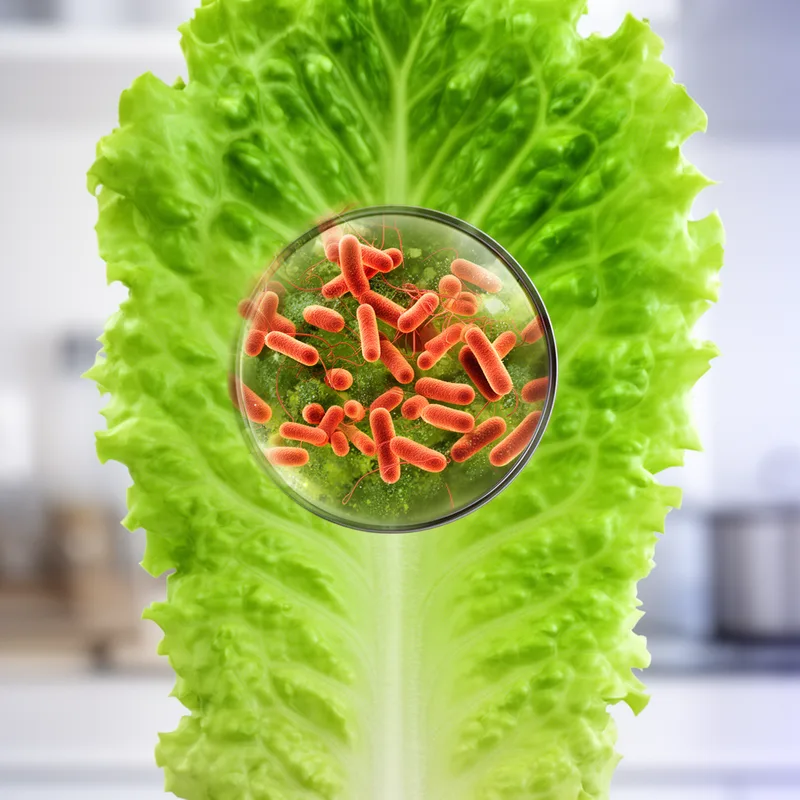
E. coli
 35
3.4

- noun
- /ˌiː koʊˈlaɪ/
- Specialized
- Last summer, there was an alarming number of hospitalizations due to E. coli contamination in bagged salads.
- E. coli O157
- E. coli O157:H7
- ESBL-producing E. coli
Loading YouTube…
Watch on YouTubeSo if one is contaminated with E coli or or another a bug, you are potentially contaminating a lot of people.
- So if one is contaminated with E coli or or another a bug, you are potentially contaminating a lot of people.
- In fact, there's a great study done finding that honey inhibits pathogenic bacteria like staph infection, staph aureus, and E coli.
- So this one says it kills E coli, it kills MRSA salmonella, but it also kills influenza and the coronavirus as well, among other things.
- But there are collections both for E coli and for budding yeast where this has been done.
Examples
-
Fifty people were hospitalized from an E. coli outbreak.
-
And these would be the more harmful E. coli.
-
90 confirmed cases of E. coli poisoning.
-
Turns out the burger patties were contaminated with E. Coli, which can cause cramping and diarrhea.
-
Toxic strains of the usually benign Escherichia coli, such as E. coli O157:H7, are turning up at increased frequencies.
Academic text (2000) -
Infection from E. coli can cause severe gastrointestinal symptoms and should be treated promptly.
-
Health officials recommend cooking meat thoroughly to avoid E. coli infection.
Synonyms
 1
4.2
A common kind of bacteria that lives in the gut of people and animals and sometimes causes illness
Surface Forms
Morphology
E. + coli
E. coli is a scientific binomial (short for Escherichia coli) and functions as a technical proper name; the tokens 'E.' and 'coli' are not ordinary English words a B1 learner would know or be able to compose. Because the meaning (a bacterium that can cause illness) is specialized and cannot be derived from the visible constituents, this item is not transparently interpretable by learners without prior exposure.
Etymology
E. coli gets its name from the scientist Escherich, shown by E., and the word coli, which comes from the 'colon', a part of the gut where this germ lives. So E. coli is a germ named for the place it lives, which helps explain why it often appears in food and can cause sickness.