
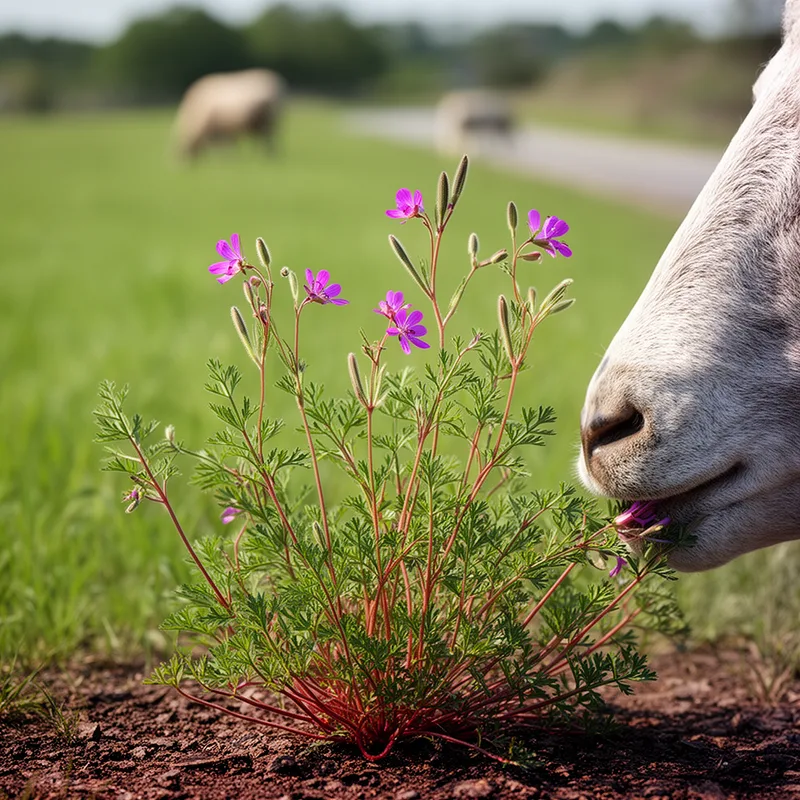
Erodium cicutarium
- noun
- Specialized
- The delicate, fern-like leaves and upright fruits make Erodium cicutarium easy to identify in the wild.
Examples
-
Ranchers sometimes use Erodium cicutarium as a forage plant for their livestock.
-
Erodium cicutarium is commonly found growing along roadsides and in open fields across California.
-
The Erodium cicutarium is often found in grassy areas.
-
Farmers appreciate Erodium cicutarium as a forage plant.
-
Erodium cicutarium provides essential nutrients and is often favored by ranchers for its value as forage.
-
In spring, Erodium cicutarium blooms with beautiful reddish-lavender flowers that attract pollinators.
-
You can spot Erodium cicutarium by its sprawling stems and fernlike leaves in many North American fields.
Synonyms


 1
9.9
1
9.9
A small wild plant with reddish fernlike leaves and tiny purple flowers that animals eat
A small wild plant with thin red stems and small purple flowers that gives food to animals in spring
A weed with reddish stems and small purple flowers used as food for farm animals

A small plant often found as a weed with red stems, feathery leaves, and pink-purple flowers

A low plant with reddish stems and leaves like a fern often found in fields and eaten by animals
A spreading plant with reddish flowers grown for animal food
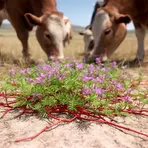
A plant with red creeping stems, fernlike leaves, and small reddish lavender flowers eaten by cattle

A plant from Europe with red stems and lavender flowers grown for animal food
Surface Forms
Morphology
Erodium + cicutarium
This is a Latin binomial (scientific) name that functions as a lexical label for a particular species rather than a compositional English phrase. Even if a learner recognised 'Erodium' as a plant genus, the second element 'cicutarium' is not an English word and the species meaning cannot be predicted from the parts, so it is not transparently derivable by a B1 learner.
Etymology
Erodium cicutarium gets its name from the shape of its seed pods. The first word Erodium may come from a word for a heron or stork because the plant's long, thin fruits look like a bird's bill, and the second word cicutarium may refer to a similar plant, so the beak image helps you remember this weed and its common name 'stork's-bill'.