
Ephesus
 7
9.0
7
9.0

- proper noun
- The emperor instructs Victor and Shenoute to attend the Council of Ephesus (431) with Cyril of Alexandria.
- Council of Ephesus
- Ephesus in 431
- Ephesus and Cyril
Loading YouTube…
Watch on YouTubeSophia, a real person, not an allegory, sat on the top row of seats in the amphitheater at Ephesus.
- Sophia, a real person, not an allegory, sat on the top row of seats in the amphitheater at Ephesus.
Examples
-
32 If I fought wild beasts in Ephesus for merely human reasons, what have I gained?
Blog text (9) -
Also, I did an exotic acoustic tour in Ephesus, Turkey, in the venue where St. Paul preached.
Blog text (25) -
But why did the Lord direct Paul to go to Ephesus in the first place?
Blog text (12) -
We want to make the ancient city of Ephesus more attractive to tourists.
Blog text (4) -
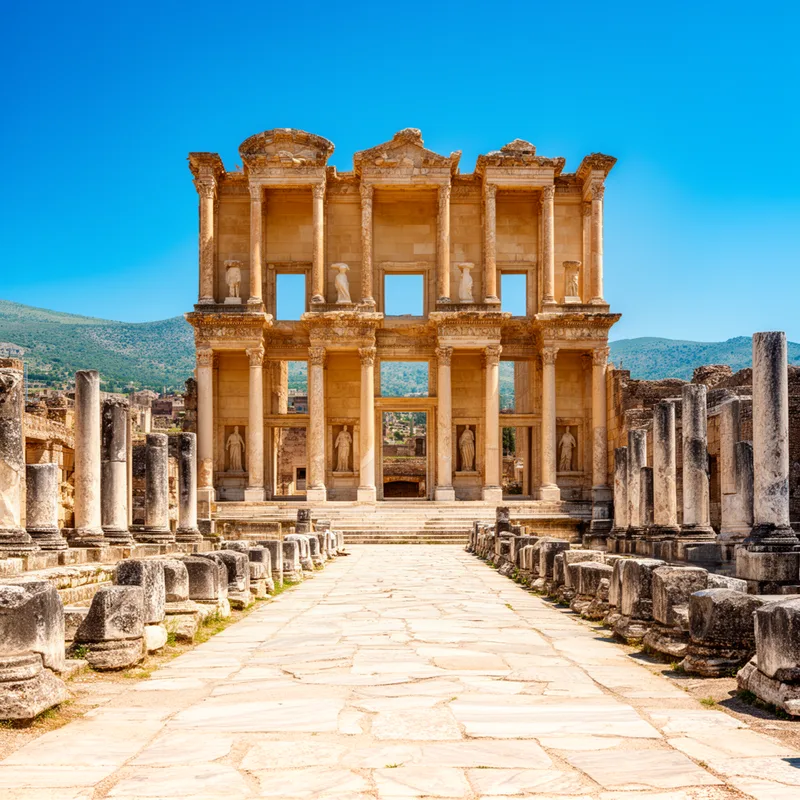
This is the library of Kelsis in Ephesus, on the western coast of Turkey.
-
The temple of Diana would stand at Ephesus (from time to time).
Academic text (2006) -
Compared to the average inhabitant of Ephesus, gladiators ate more plants and very little animal protein.
Academic text (2008) -
We visited the ancient ruins of the Temple of Artemis in Ephesus during our trip to Turkey.
-
The Apostle Paul wrote letters to the church in Ephesus while he was in prison.
-
Archaeologists continue to uncover fascinating artifacts in Ephesus, shedding light on its rich history.
Compounds

A church meeting in 431 that says Mary is the mother of God and rejects Pelagius's ideas
Surface Forms
Etymology
Ephesus comes from the ancient Greek name Ephesos and was a famous port city on the west coast of Asia Minor, known for the great Temple of Artemis and visits by early Christians. So Ephesus today means that well-known ancient city and its ruins.