
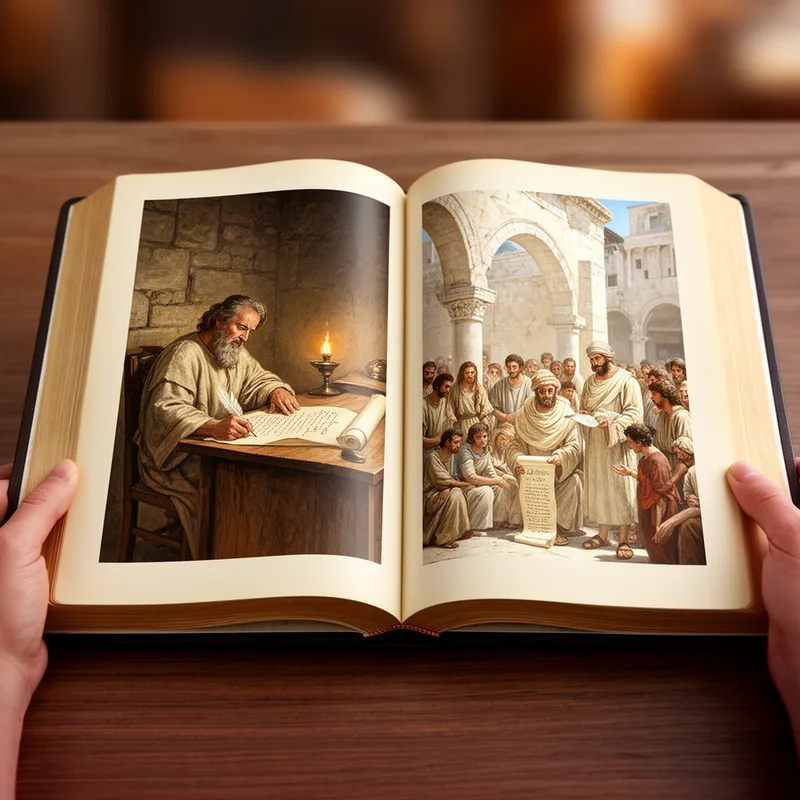
Ephesians
- noun
- /ɪˈfiːʒənz/
- The letter to the Ephesians discusses themes of unity and faith in the body of Christ.
Loading YouTube…
Watch on YouTubeAnd I think that there's a verse in Ephesians that says his husbands were supposed to lay down our lives for our wife like Christ did for the church.
- And I think that there's a verse in Ephesians that says his husbands were supposed to lay down our lives for our wife like Christ did for the church.
Examples
-
And I think that there's a verse in Ephesians that says his husbands were supposed to lay down our lives for our wife like Christ did for the church.
-
The writer to the Ephesians condemns that kind of language.
-
And more people believe that Ephesians is not by Paul.
-
In church, we often read passages from Ephesians to learn about Christian living.
-
Many scholars debate the authorship of the book of Ephesians in the New Testament.
Synonyms

A New Testament letter by Paul to the people of Ephesus about being saved through Christ

A New Testament letter by Paul to Christians in Ephesus about unity in Christ
Compounds
A New Testament letter by Paul to the people of Ephesus about being saved through Christ
A New Testament letter by Paul to Christians in Ephesus about unity in Christ
Surface Forms
Morphology
Etymology
Ephesians comes from the city Ephesus and means 'people from Ephesus'. It is the New Testament letter Saint Paul wrote to the Christians there, so the name shows who the book is for.

