

El Niño Southern Oscillation


 1
6.6
1
6.6
- noun
- /ɛl ˈniːnjoʊ ˈsʌðərn ˌɒskəˈleɪʃən/
- Specialized
- The El Niño Southern Oscillation significantly affects global weather patterns, causing unusual rainfall and temperature changes.
- El Niño Southern Oscillation (ENSO)
Examples
-
A prolonged El Niño Southern Oscillation can lead to severe droughts in some areas and flooding in others.
-
The shifts are punctuated by extreme El Niño Southern Oscillation events.
Blog text (29) -
In New Mexico, the El Niño-Southern Oscillation (ENSO) phenomenon causes increased precipitation during fall, winter, and spring.
Academic text (2002) -
The third group of studies focuses on the apparent influence of precipitation associated with El Niño events or with the El Niño-Southern Oscillation (ENSO) pattern.
Academic text (2002) -
Scientists study the El Niño Southern Oscillation to understand its impact on climate variations around the world.
Synonyms
 16
4.2
16
4.2
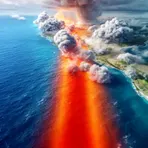
A regular warming of Pacific Ocean water that changes weather patterns
Surface Forms
Morphology
El + Niño + southern + oscillation
While 'southern' + 'oscillation' would suggest a recurring movement or variation occurring in the south, the element 'El Niño' is a borrowed proper name (Spanish) and the full technical sense — periodic warming of tropical Pacific surface waters with global climate effects — is specialized and not derivable by a B1 learner from the parts. Many languages borrow the term 'El Niño', so some learners may recognize it, but overall the specific meteorological meaning requires prior exposure or domain knowledge rather than straightforward composition.
Etymology
El Niño Southern Oscillation gets its name from two images: fishermen called a warm sea event El Niño, 'the little boy', because it often appeared near Christmas, and the Southern Oscillation means a regular 'back-and-forth' change in wind and weather across the Pacific. So the full name describes a repeating pattern of warm water and weather changes that can affect the whole world.