

Echium vulgare
- noun
- Specialized
- The meadow was covered with Echium vulgare, its blue blossoms attracting bees all summer.
Examples
-
Gardeners sometimes plant Echium vulgare for its striking spikes of color and drought tolerance.
-
Echium vulgare has beautiful blue flowers that grow in spikes and are often seen along roadsides in Europe.
-
Echium vulgare is considered a weed in some regions, but valued as a wildflower in others.
-
The garden was filled with Echium vulgare this summer.
-
Have you ever seen Echium vulgare in bloom?
-
Many pollinators are drawn to Echium vulgare due to its vibrant blue spikes of flowers blooming in the summer.
-
In my garden, I planted Echium vulgare because it attracts butterflies with its striking blue blossoms.
Synonyms

A rough, prickly plant from Europe with bright blue flower spikes

A rough prickly plant that has spikes of bright blue flowers
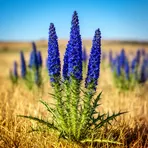
A prickly plant with tall spikes of blue flowers that grows in fields
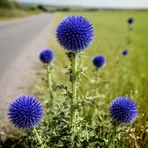
A prickly plant with spiky blue flowers often growing by roads and fields

A group of rough, bristly plants with blue or purple flower spikes
Surface Forms
Morphology
Echium + vulgare
This is a Latin binomial: 'Echium' identifies a plant genus so a learner who knows that constituent could infer the expression denotes a type of plant, but 'vulgare' is a Latin species epithet (not given here) and the specific common-name sense ('viper's bugloss', coarse prickly European plant) is technical and not directly recoverable. Because part of the meaning (it’s a species of Echium) is compositional but the precise referent and details require botanical or Latin knowledge, the item is only partially predictable to a B1 learner.
Etymology
Echium vulgare comes from old Greek and Latin words: Echium comes from a Greek word for 'viper' because its seeds and flower tips can look like a snake's head, and vulgare means 'common' in Latin. One popular story says people once used the plant for 'snakebites', so the name links the plant's look and its common use.

