
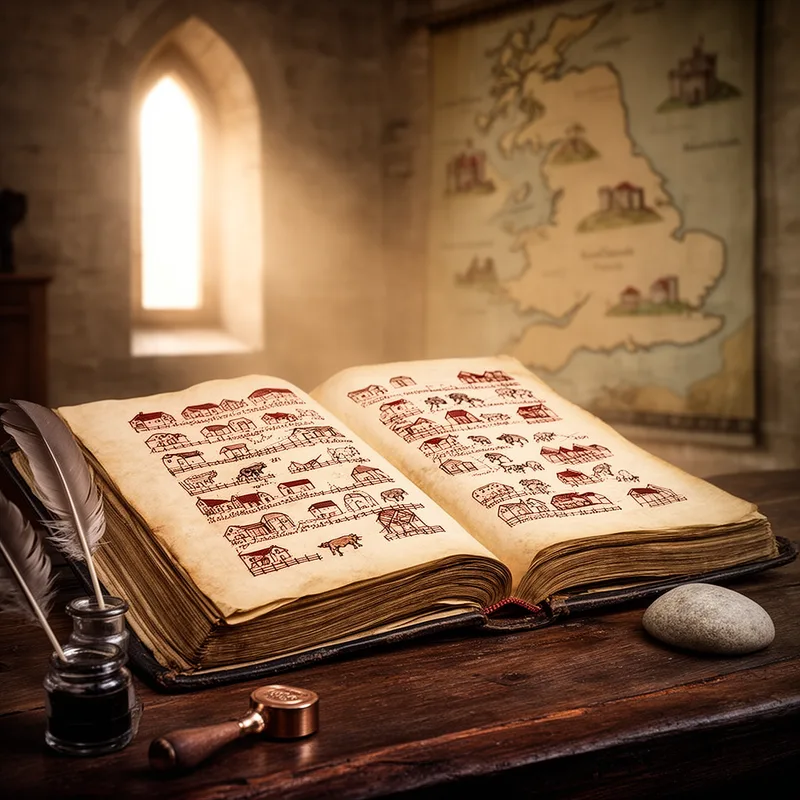
Domesday
 1
9.9
1
9.9

- proper noun
- At the time of the compilation of the Domesday Survey in the late eleventh century, vineyards were recorded in 46 places in southern England, from East Anglia through to modern-day Somerset.
- Domesday Book
Examples
-
By the time of the Domesday Book in 1086, the vale had an estimated population density of 10.3 persons per square mile (Holly 1954, 353-354).
Academic text (1990) -
The Domesday Book, a great survey of English wealth in 1086, listed it as one of the 10 largest towns in England, with three churches and yearly royal taxes of 68,000 herring.
Academic text (2009) -
Even got a mention in the Domesday Book.
-
It had just been built when the Domesday Book was written.
-
The Domesday Book in 1085 recorded about 40.
Blog text (14) -
There are 60 million people now in the UK and around 1.5 million at the time of Domesday in 1086.
Blog text (14) -
Wine was widely grown in England during the MWP; have a look in the Domesday Book.
Blog text (14) -
The Domesday Book is an important historical document that records land ownership in England from 1086.
-
Many towns were included in the Domesday Book, which documented the resources and hierarchy of feudal England.
-
Researchers often refer to the Domesday Book to study the socio-economic conditions of England in the 11th century.
Synonyms
An official list of land and property in England made in 1086 by William the Conqueror
Official record from 1086 listing landowners and resources in England
Compounds
An official list of land and property in England made in 1086 by William the Conqueror
Surface Forms
Morphology
Etymology
Domesday as the name of the famous 1086 survey also comes from old English dōm ('judgment') and dæg ('day'), because people saw the record as a final, official decision about land. That's why the book was called Domesday: it settled who owned what as if by judgment.