
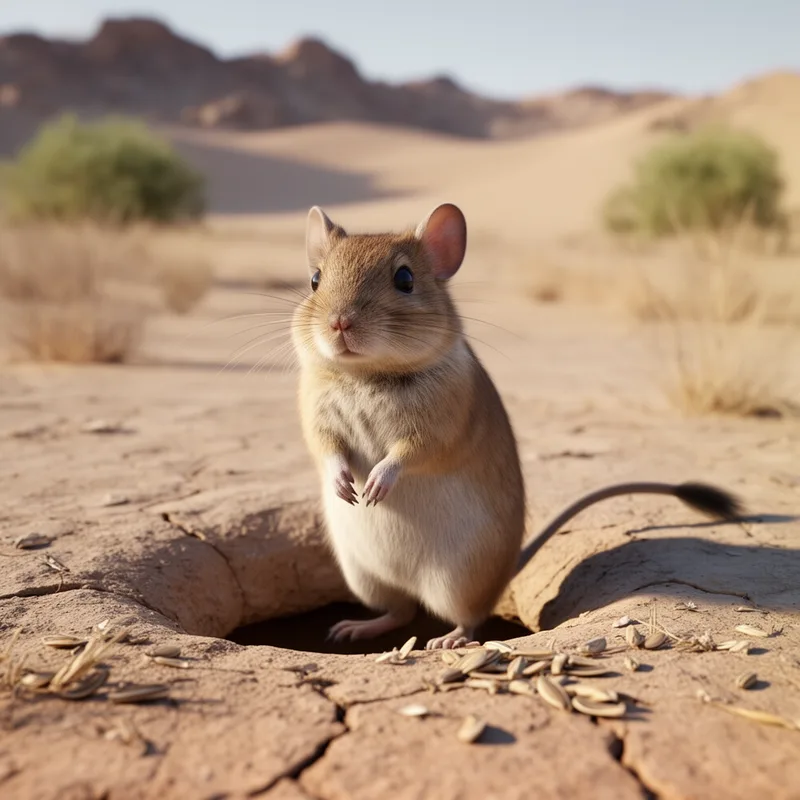
Dipodomys
- proper noun
- /ˌdɪpəˈdoʊmɪs/
- Specialized
- Research shows that kangaroo rats, specifically Dipodomys ingens, play a vital role in their ecosystem by aerating the soil with their burrowing.
- kangaroo rat (Dipodomys)
- Dipodomys rat
Examples
-
Note that the second most abundant species, the banner-tailed kangaroo rat, Dipodomys spectabilis, showed a catastrophic decline over the winter of 1983-1984.
Academic text (2002) -
For example, giant kangaroo rats (Dipodomys ingens) in the American West continually modify their burrow precincts by digging tunnels, clipping plants, and engaging in other activities.
Academic text (2004) -
Chisel-toothed kangaroo rat (Dipodomys microps) survives on a diet of salt-loving desert plants in the Great Basin Desert of the western United States.
Academic text (2003) -
The banner-tailed kangaroo rat, Dipodomys spectabilis, is known for its remarkable ability to survive in extreme desert conditions.
-
In the arid regions of North America, the Dipodomys genus includes several species of kangaroo rats that have adapted to their environment.
Synonyms
 1
6.3
1
6.3

A small desert animal like a mouse that hops on long hind legs and has a long tail
Compounds
- Specialized
A small animal like a kangaroo rat that lives in dry plains and mountains of central and western United States

- Specialized
A large kangaroo rat that jumps and lives in dry desert burrows
Surface Forms
Etymology
Dipodomys comes from Greek parts di- 'two' and -pous 'foot'. Scientists gave this name because these desert rats move by hopping on their two large back feet, so the name points to their two-footed way of moving.