
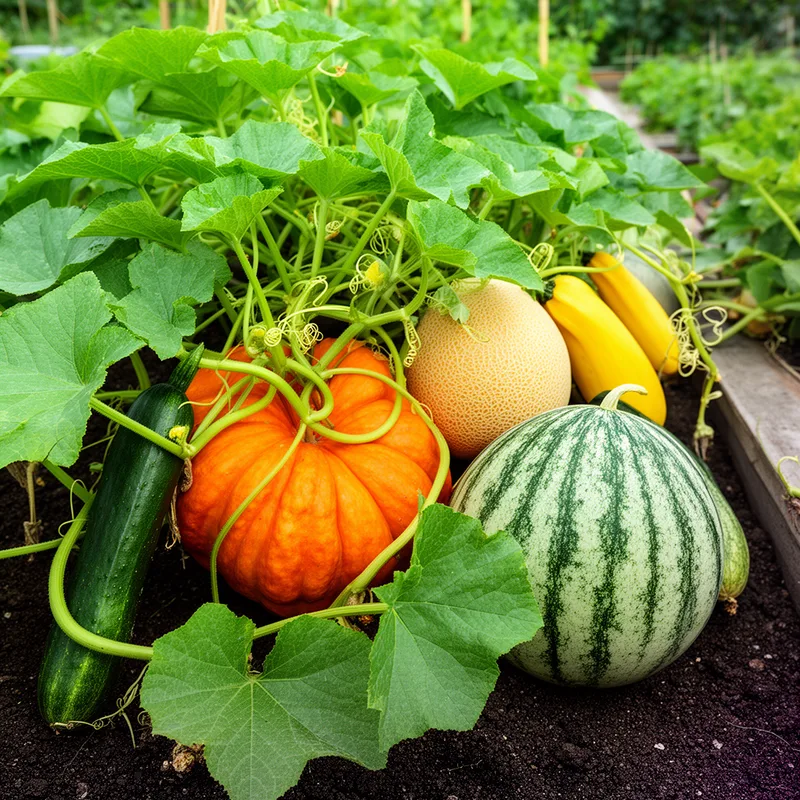
Cucurbitaceae
- noun
- /ˌkjuːkərˈbɪteɪʃiː/
- Specialized
- Pumpkins, which belong to the Cucurbitaceae family, are often used for making pies during the fall season.
- Cucurbitaceae family
Examples
-
Cucurbitacins are compounds found in the Cucurbitaceae family of plants that include cucumbers, squash, all gourd plants, watermelons, and cantaloupe.
Academic text (1997) -
Many studies have shown that pumpkin, belonging to the family Cucurbitaceae, is a perennial plant and is consumed traditionally in a variety of foods such as fresh or cooked vegetables, as well as being stored frozen or canned.
Academic text (2015) -
Cucumbers are a popular member of the Cucurbitaceae family, known for their refreshing taste in salads.
-
The Cucurbitaceae family includes a variety of plants, such as melons and squashes, that thrive in warm climates.
Synonyms
A group of plants like cucumbers, melons, and pumpkins that grow as vines
Surface Forms
Morphology
Etymology
Cucurbitaceae comes from the Latin word cucurbita, meaning 'gourd', and the ending -aceae, which marks a plant family. So Cucurbitaceae is the 'gourd' family, the group that includes cucumbers, pumpkins, melons and squashes.

