

Cryptococcus
 1
9.8

- noun
- /ˌkrɪptoʊˈkɒkəs/
- Specialized
- Three patients were being treated for fungal infection premortem: 2 Cryptococcus meningitis and 1 disseminated histoplasmosis.
- Cryptococcus neoformans
Examples
-
The doctor diagnosed the patient with an infection caused by Cryptococcus after reviewing their lab results.
-
Effective activity against yeasts, such as Candida species, Cryptococcus neoformans, Histoplasma capsulatum, Blastomyces dermatitidis, and molds of the Aspergillus species.
Academic text (2005) -
Which of the following statements regarding Cryptococcus gattii infections is most accurate?
Academic text (2013) -
Histopathologic examination results demonstrating Cryptococcus yeasts in tissue were also considered evidence of infection at the tissue site.
Academic text (2013) -
Inhibits some Candida, Cryptococcus, and Aspergillus strains
Academic text (2005) -
Cryptococcus gattii, a fungal pathogen found in the environment, is associated with soil and decaying organic debris.
Academic text (2013) -
In individuals with weakened immune systems, Cryptococcus can lead to severe respiratory illnesses.
-
Fungal infections from Cryptococcus can be particularly dangerous for those with HIV/AIDS.
Compounds

- Specialized
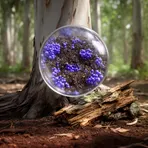
A fungus that lives in soil, decaying wood, and on eucalyptus trees
Surface Forms
Morphology
Etymology
Cryptococcus comes from two Greek parts: crypto- meaning 'hidden' and -coccus meaning 'berry' or 'round seed', and it is the same root as cryptic. So, think of a 'hidden berry' — a small round fungus that can be hard to see and sometimes causes infections in people with weak immune systems.