
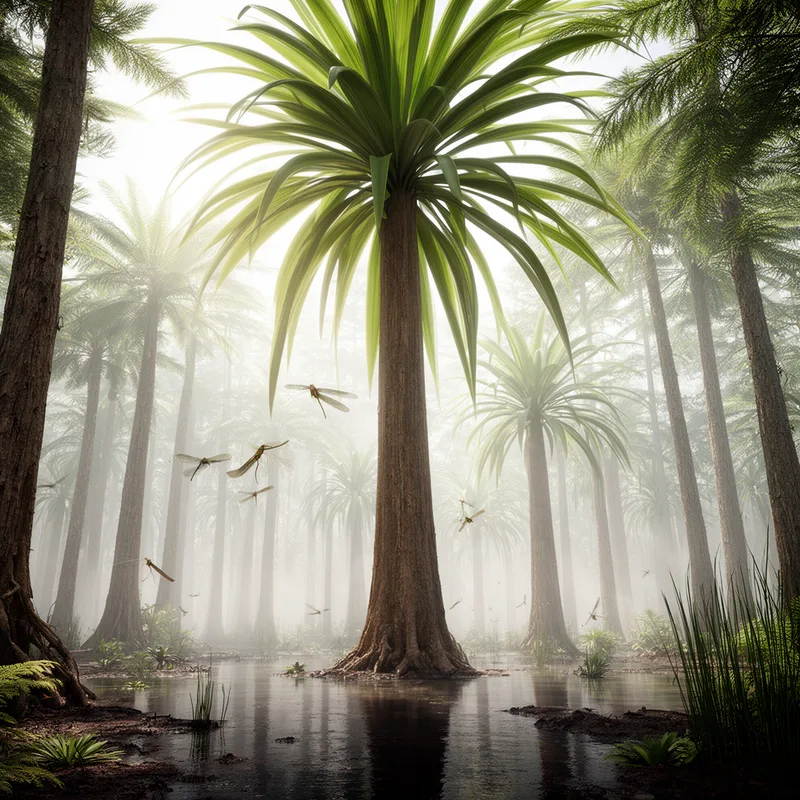
Cordaites


 1
9.9
- noun
- Specialized
- The structure of Cordaites demonstrates a unique combination of features that bridge the gap between cycads and conifers.
Examples
-
Fossils of Cordaites show that these trees grew in swampy environments during the late Paleozoic era.
-
The leaves of Cordaites were long and strap-shaped, resembling those of some modern plants.
-
Paleobotanists study Cordaites to understand the evolution of conifers and other seed plants.
-
The Cordaites thrived in wet, swampy environments during the Paleozoic era.
-
Many fossils of Cordaites have been discovered in North America.
-
Fossils of Cordaites reveal that these ancient trees flourished in wet, swampy conditions millions of years ago.
-
Paleobotanists are conducting research on Cordaites to gain insights into the evolutionary history of seed plants.
Surface Forms
Etymology
Cordaites can be remembered by the word cord, which means 'rope'; these ancient trees had long, strap-like leaves and tall, straight trunks that look a bit like ropes, so the name brings to mind tall, cord-like plants.