
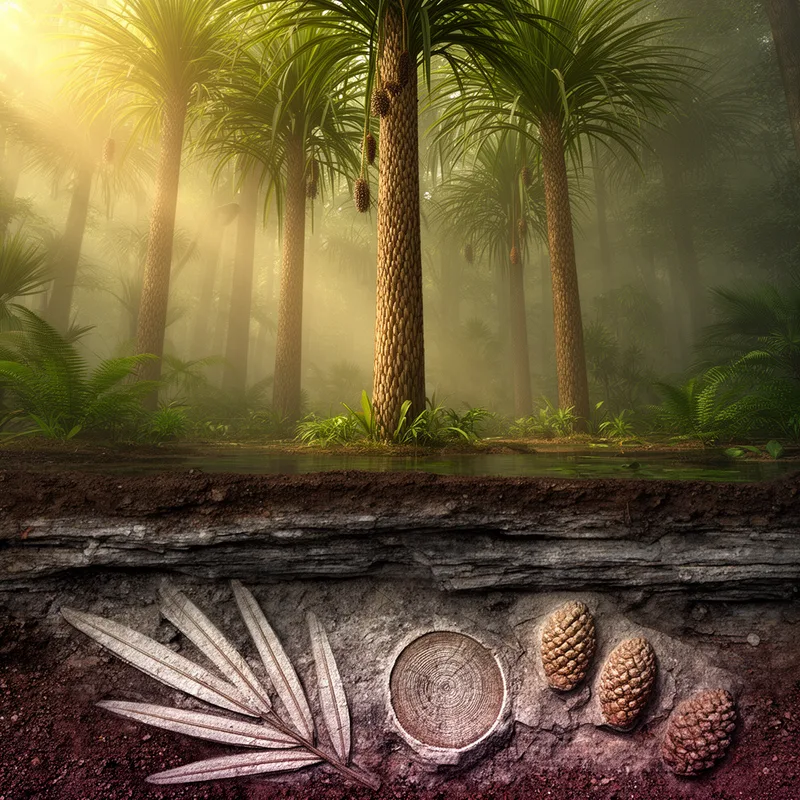
Cordaitaceae
- noun
- /kɔːrˈdeɪəˌsiː/
- Specialized
- The Cordaitaceae family thrived during the Paleozoic era.
Examples
-
Plants in the Cordaitaceae family were widespread during the Carboniferous period.
-
Many fossils of Cordaitaceae have been discovered in North America.
-
Fossils of Cordaitaceae provide important clues about prehistoric plant evolution.
-
The extinction of Cordaitaceae marked a turning point in gymnosperm history.
-
Fossils of Cordaitaceae provide important clues about prehistoric plant evolution.
-
Plants in the Cordaitaceae family were widespread during the Carboniferous period.
-
Many fossils of Cordaitaceae have been discovered in North America.
Surface Forms
Morphology
Etymology
Cordaitaceae comes from the plant genus Cordaites plus the botanical ending -aceae, which means 'family'. The genus Cordaites was named for the 19th-century naturalist Corda, so the name points to 'Corda's plants'. That is why Cordaitaceae simply means the plant family of ancient Cordaites, the extinct plants we know from fossils.

