

Cockcroft and Walton accelerator
- noun
- Specialized
- A Cockcroft and Walton accelerator uses a series of capacitors and rectifiers to generate high voltages.
Examples
-
The laboratory installed a Cockcroft and Walton accelerator to conduct new experiments in nuclear physics.
-
Many early research facilities relied on the Cockcroft and Walton accelerator to provide beams of accelerated particles.
-
The Cockcroft and Walton accelerator is essential for particle physics research.
-
Many universities now use Cockcroft and Walton accelerators in their labs.
-
A Cockcroft and Walton accelerator uses a series of capacitors and rectifiers to generate high voltages.
-
Many early research facilities relied on the Cockcroft and Walton accelerator to provide beams of accelerated particles.
-
The laboratory installed a Cockcroft and Walton accelerator to conduct new experiments in nuclear physics.
Synonyms
 11
5.5
11
5.5

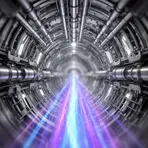
A machine that makes tiny charged particles move faster for science or medicine
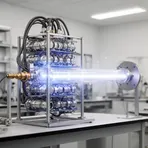
A device that uses electrical parts to make high voltage and speed charged particles through a tube
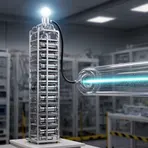
A device that makes very high voltages to speed up charged particles
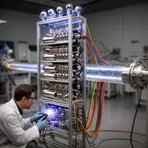
A device that makes very high electric voltages to speed charged particles for physics experiments
Surface Forms
Morphology
Cockcroft + and + Walton + accelerator
A B1 learner who knows 'accelerator' and 'and' can infer this is a specific type of accelerator named after two people, but the proper names 'Cockcroft' and 'Walton' are opaque and do not convey the device's technical properties. Therefore the overall category (a named accelerator) is recoverable but the specialized meaning and mechanisms cannot be derived from the constituents without prior exposure.
Etymology
Cockcroft and Walton accelerator is named after the two scientists who built a machine that used stacked capacitors and rectifiers like a ladder of electric steps to make very high voltages. Those high voltages pushed particles down a tube and made them go faster, so the name now means a machine that 'accelerates' charged particles.