
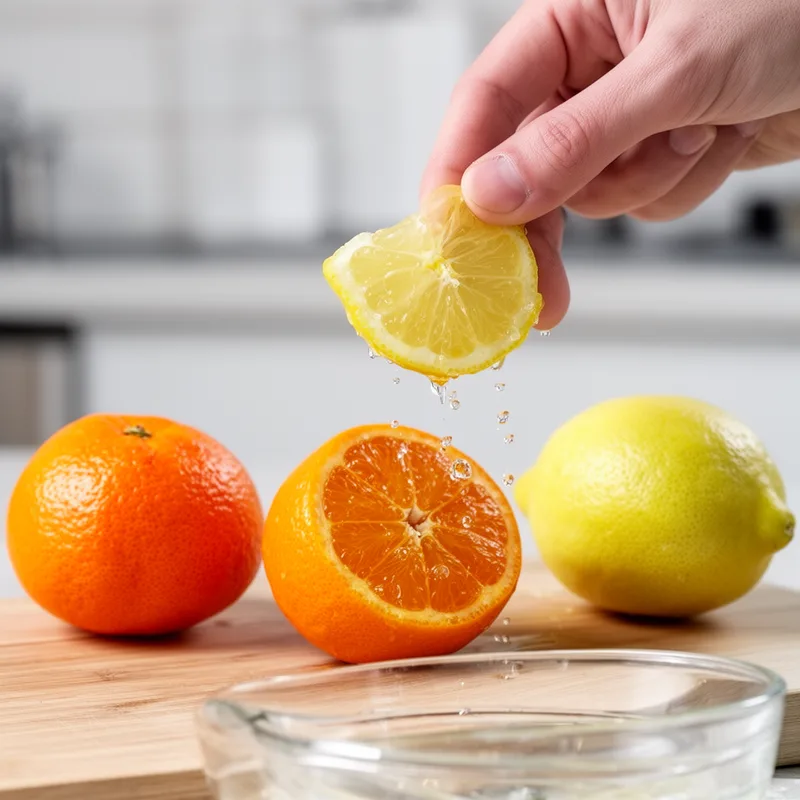
Citrus limonia
- noun
- Specialized
- The orchard specializes in growing Citrus limonia, prized for its distinctive flavor and tartness.
Examples
-
Chefs sometimes substitute Citrus limonia for lemons in recipes needing extra acidity.
-
I bought some Citrus limonia at the farmer's market.
-
Scientists are studying the genetic traits of Citrus limonia to improve citrus crop resilience.
-
Have you ever tried Citrus limonia juice?
-
Chefs sometimes substitute Citrus limonia for lemons in recipes needing extra acidity.
-
The orchard specializes in growing Citrus limonia, prized for its distinctive flavor and tartness.
-
Have you ever tried Citrus limonia juice for a refreshing drink?
Synonyms

A fruit that is a cross between a mandarin and a lemon with very sour flesh and orange peel

A small citrus fruit with very sour juice and bright orange skin

A small fruit like an orange but with very sour juice
Surface Forms
Morphology
Citrus + limonia
The element 'Citrus' clearly signals a fruit genus so learners will recognise it as a type of citrus fruit; however 'limonia' is not a standard English word (no dictionary entry) and behaves like a Latin species epithet. Its shape suggests a connection to 'lemon/limon', allowing learners to infer a lemon-like or hybrid citrus but not the precise botanical hybrid, so the meaning is only partially predictable.
Etymology
Citrus limonia is a fruit that is a cross between a mandarin orange and a lemon, so it has an orange-coloured peel but very sour juice. The name limonia comes from the word 'lemon', which explains why chefs use it when a recipe needs extra sourness.

