
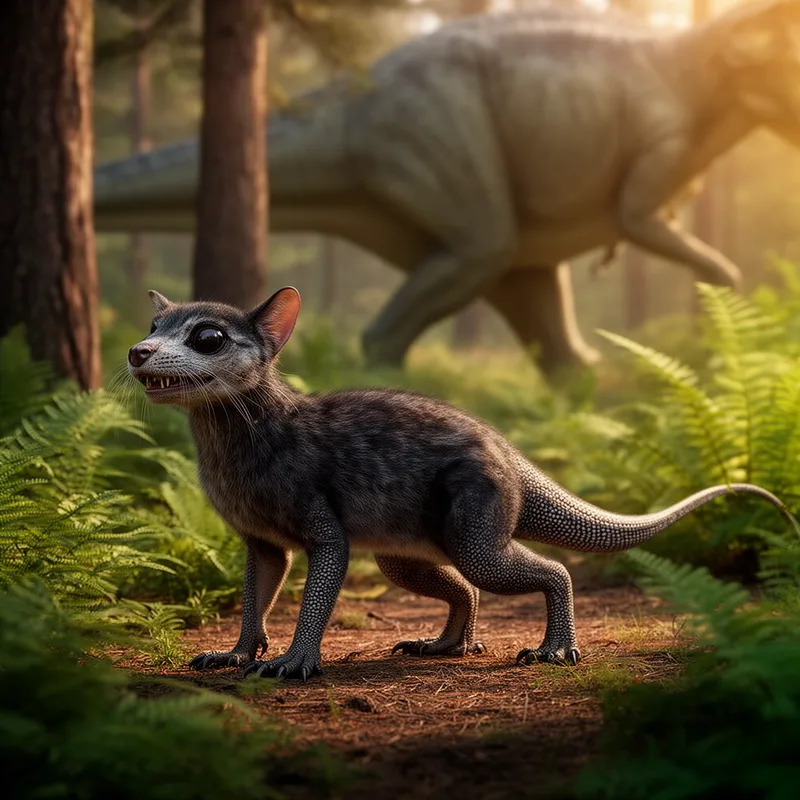
Chronoperates
- noun
- Specialized
- The fossil record shows that Chronoperates lived during the Late Cretaceous.
Examples
-
The discovery of Chronoperates in Late Cretaceous rocks surprised paleontologists.
-
Fossils of Chronoperates have provided new insights into the evolution of prehistoric reptiles.
-
Researchers believe Chronoperates may have survived longer than other therapsids.
-
Did you know that Chronoperates were part of the therapsid lineage?
-
Fossils of Chronoperates provide important clues about the diversity of reptiles during the Late Cretaceous period.
-
The recent excavations revealed a well-preserved specimen of Chronoperates that could change our understanding of therapsid evolution.
-
Paleontologists discovered Chronoperates fossils in various locations, indicating it was a widespread species during its time.
Compounds
- Specialized
A small extinct animal like an early mammal that lived in Alberta in Canada 55 million years ago
Surface Forms
Etymology
Chronoperates can be remembered from chrono- 'time', so think of a 'time traveler' fossil to help you recall that the name marks a genus of extinct mammal-like reptiles known from the Late Cretaceous.

