
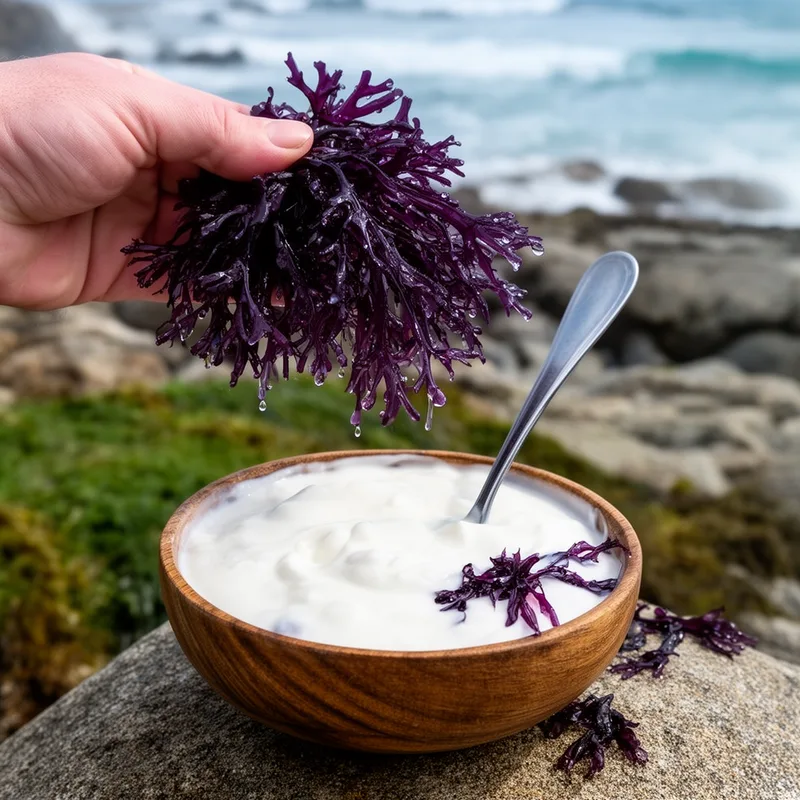
Chondrus crispus
- noun
- /ˈkɒndrəs ˈkrɪpəs/
- Specialized
- Carrageenan is extracted from Chondrus crispus for use in food products such as ice cream and yogurt.
Examples
-
On the rocky shores of Ireland, Chondrus crispus is harvested for its culinary and medicinal properties.
-
Botanists studied the growth patterns of Chondrus crispus along the Atlantic coastline.
-
I love adding Chondrus crispus to my salads.
-
Have you tried Chondrus crispus in your cooking?
-
Carrageenan is extracted from Chondrus crispus for use in food products such as ice cream and yogurt.
-
On the rocky shores of Ireland, Chondrus crispus is harvested for its culinary and medicinal properties.
-
I love adding Chondrus crispus to my salads.
Synonyms

A dark purple edible seaweed from Atlantic coasts used to thicken food
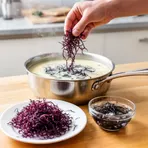
A dark purple seaweed eaten and used to make food thicker
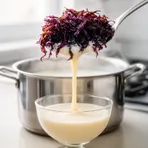
A dark purple seaweed eaten and used to thicken food like puddings
Surface Forms
Morphology
Chondrus + crispus
This is a Latin binomial (a scientific species name) and functions as a proper noun rather than a compositional phrase; the second element 'crispus' is not a familiar English word and the genus name 'Chondrus' is technical. Even if a learner recognised 'Chondrus' as a type of algae, the overall meaning (a specific species of seaweed) is a lexical label rather than a predictable combination of constituent meanings, so it would not be derivable by an average B1 learner.
Etymology
Chondrus crispus comes from old Greek and Latin words. Here Chondrus means 'cartilage' because the seaweed feels rubbery, and crispus means 'curled', so the name paints a picture of a rubbery, curled seaweed that people use to thicken foods.

