
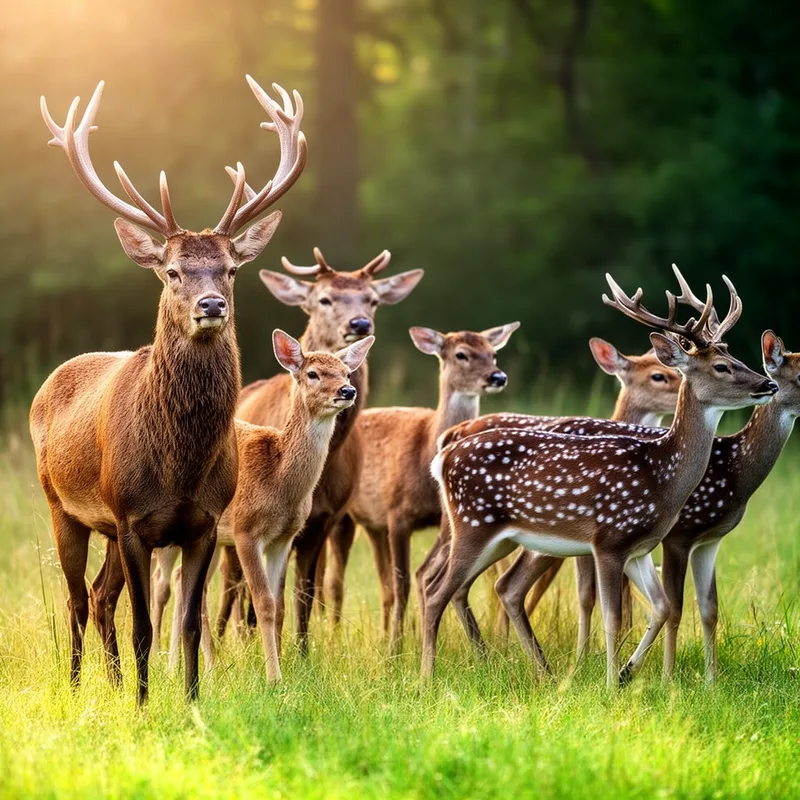
Cervus
- noun
- Specialized
- One is tempted to suspect the Old French author of a pun on cervus and cereus.
- Cervus elaphus
- red deer
Examples
-
Table 1. Estimated prevalence of Mycobacterium caprae in red deer (Cervus elaphus), Alpine region, 2009-10, 2010-11, and 2011-12 hunting seasons.
Academic text (2015) -
In wildlife documentaries, Cervus species are often highlighted for their impressive antlers and graceful movements.
-
In the background of this fascinating cervus episode, Virgil seems to evoke an ancient association with the legendary foundation of a new city.
Academic text (1994) -
Free-ranging red deer (Cervus elaphus) were a maintenance host in a hot-spot area, mainly located in Austria.
Academic text (2015) -
Mycobacterium caprae has been isolated from cattle, domestic goats, domestic pigs, red deer (Cervus elaphus), and wild boar (1).
Academic text (2015) -
The red deer is a well-known species of Cervus that can be found in many forests across Europe.
-
Scientists study various species within the Cervus genus to understand their behaviors and habitats.
Compounds

- Specialized
A large North American deer whose males have big branched antlers
- Specialized
A small deer that lives in East Asia, especially Japan, with small forked antlers and a spotted coat


- Specialized
A large deer from southern and southeast Asia with antlers that have three points
Surface Forms
Etymology
Cervus comes from the Latin word cervus, which simply means 'deer'. Scientists use that old word as the name for the group of large deer, such as the red deer and sika deer, so Cervus today refers to those animals.

