
Cathars
 1
9.9

- noun
- /ˈkæθɑrz/
- They were all the Crusades against the Albigensians, against the Cathars and other people.
- the Cathars in the 12th century
- known as Cathars
Examples
-
In the 12th century, the Cathars were known for their opposition to the Catholic Church's teachings.
-
During the 13th century there were these people known as Cathars.
-
And then there were some crusaders, you know, who attacked the Cathars, for example, in southern France and that sort of thing.
-
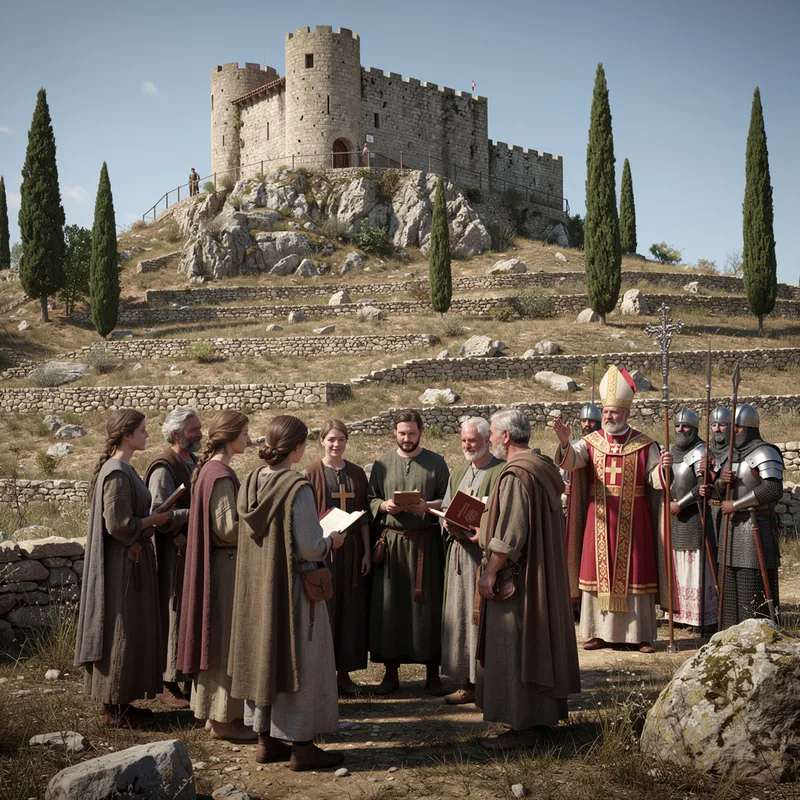
The last stronghold of the Cathars in the Pyrenees.
Blog text (28) -
Now, why don't you tell the class how the Knights of Christ turned their back on the Vatican and adopted the Cathars' beliefs?
-
For political, economic, and doctrinal reasons too complicated to go into here, the Albigensians (Cathars) refused to recognize the authority of the Church.
Academic text (2010) -
Worse still, at least to the medieval mind, these bishops had left their flocks vulnerable to the misleading and heretical doctrines of the Waldensians and the Cathars.
Academic text (2002) -
In medieval Provence, the Cathars, heirs of Mani whose meatless diet also excluded milk and cheese, were condemned for doctrinal errancy.
Academic text (2000) -
The Cathars believed in a dualistic worldview, where good and evil were in constant conflict.
-
The followers of the Cathars sought to live lives of spiritual purity and simplicity.
Synonyms


 1
9.9
A Christian group in southern France in the 1100s and 1200s who believe in two separate worlds and live simply
 1
9.9
A group of Christians in southern France in the 1100s and 1200s who had beliefs the Catholic Church rejected
Surface Forms
Morphology
Etymology
Cathars comes from the Greek katharoi meaning 'the pure ones', from katharos 'pure'. They called themselves that because they wanted a pure, simple faith, and a helpful way to remember this is to think of cathartic, a 'cleansing' feeling with the same root.