
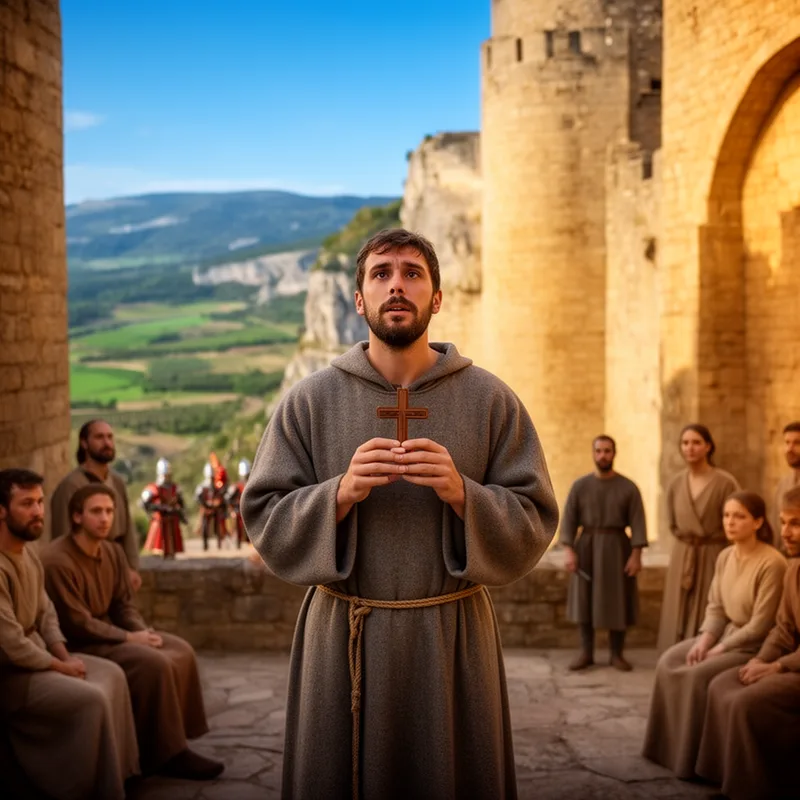
Cathar
 1
9.9

- noun
- /ˈkæθɑr/
- Many historians study the Cathar movement to understand the religious conflicts of southern France.
- Cathar heresy
Examples
-
Nor was Cathar influence necessary to raise doubts in the minds of ordinary Catholics about the miracle of the Eucharist.
Academic text (2006) -
In 1209, a Vatican army descended upon Cathar villages, and every man, woman, and child was slaughtered.
-
Back in 1209, Pope Innocent III decided to put an end to the Cathar heresy in southern France.
Academic text (2010) -
I am currently working on a rewrite and intend to relaunch the book sometime next year with a new, more informative title: "The Templar and the Cathar."
Blog text (28) -
The Cathar beliefs were considered heretical by the Catholic Church during the medieval period.
-
The Cathar community faced severe persecution as their beliefs contradicted mainstream Christianity.
Synonyms
 1
9.9
People in a Christian group in southern France in the Middle Ages who oppose the Catholic Church


 1
9.9
A person who belongs to a small religious group separate from the main church
 1
9.9
A Christian group in southern France in the 1100s and 1200s who believe in two separate worlds and live simply
Surface Forms
Etymology
Cathar comes from the Greek word katharos meaning 'pure', and it was the name used by a medieval group in southern France who saw themselves as 'the pure ones'. So a Cathar is a member of that historical group, and the name explains their aim to live a very simple, 'pure' form of Christianity.