
Carthamus
- noun
- /ˈkɑrθəməs/
- Specialized
- The genus Carthamus includes several species, but Carthamus tinctorius is the most widely grown.
Examples
-
Carthamus has long been valued for its use in producing natural dyes.
-
Botanists are studying the drought resistance of various Carthamus species.
-
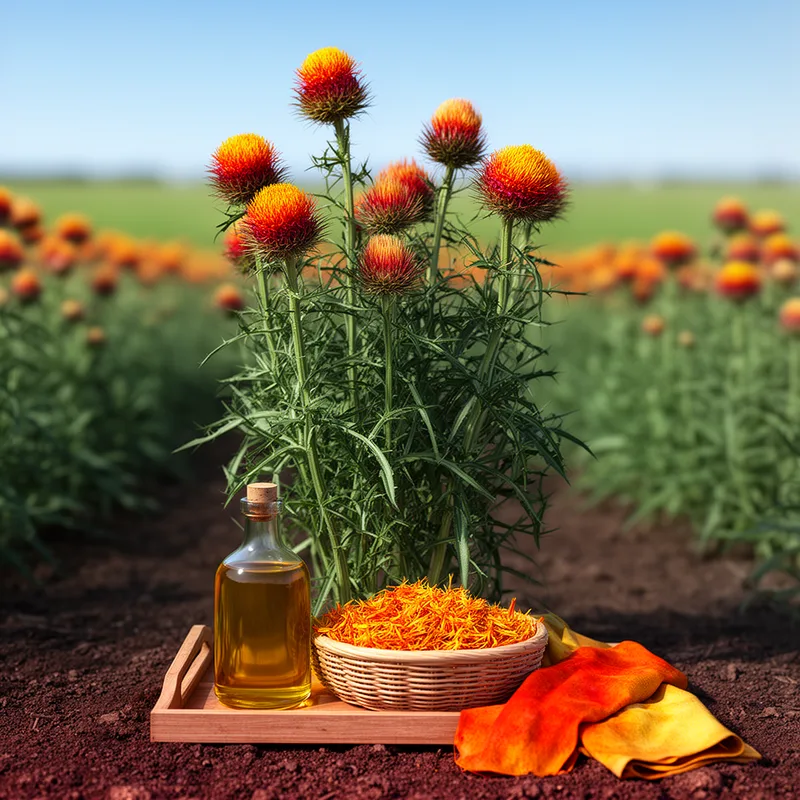
The Carthamus plant is known for its vibrant flowers.
-
Did you know that Carthamus tinctorius is often used in cooking?
-
Carthamus is primarily cultivated for its oil, which is extracted from the seeds of the plant.
-
Farmers often grow Carthamus to produce both edible oil and natural dyes.
-
In traditional medicine, extracts from Carthamus have been used for various health benefits.
Synonyms

A group of thistle-like plants like safflower that produce oil-rich seeds
Compounds

- Specialized
A thistle-like plant with red or orange flowers grown for seeds that make oil
- Specialized
A group of thistle-like plants like safflower that produce oil-rich seeds
Surface Forms
Etymology
Carthamus comes from the Greek karthamos, the old name for the 'safflower' plant. Because safflower was used for 'dye' and 'oil', Carthamus became the name for the group of flowering plants best known for that safflower species.

