
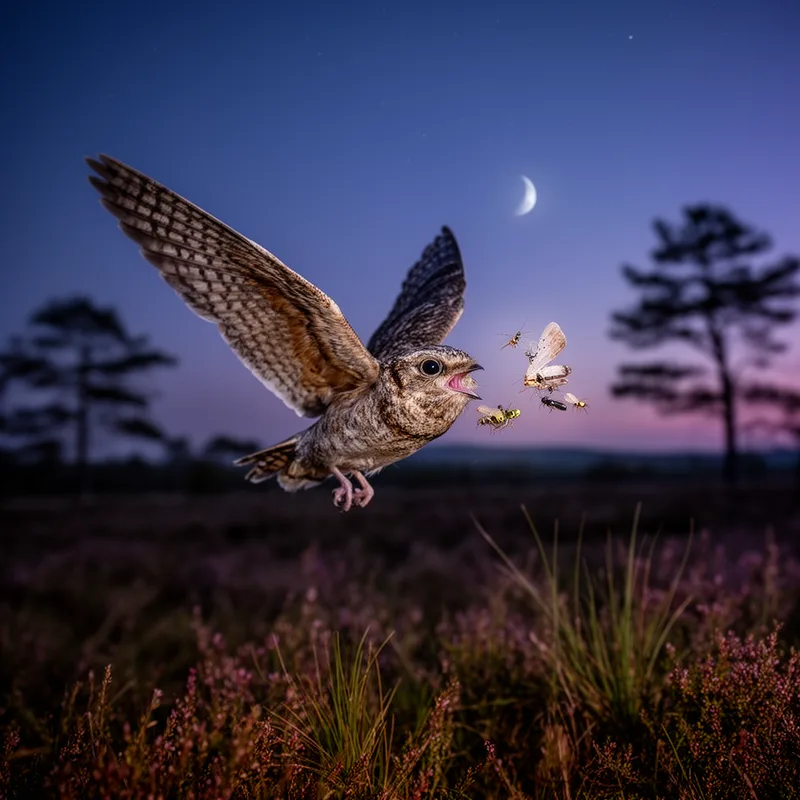
Caprimulgus europaeus
- noun
- Specialized
- The Caprimulgus europaeus is most often observed at dusk when it becomes active.
Examples
-
Some birdwatchers travel to protected heathlands to spot the elusive Caprimulgus europaeus.
-
Researchers tagged several Caprimulgus europaeus to learn more about their migration patterns.
-
The Caprimulgus europaeus is known for its distinctive calls.
-
Have you ever seen a Caprimulgus europaeus in the wild?
-
Many people enjoy listening for the unique calls of the Caprimulgus europaeus during warm summer nights.
-
The Caprimulgus europaeus, often called the nightjar, is known to camouflage perfectly with its surroundings.
-
Bird enthusiasts flock to woodlands in hopes of catching a glimpse of the elusive Caprimulgus europaeus at twilight.
Synonyms

A night bird in Europe that is active at dusk and dawn with camouflaged feathers and a churring call
A night bird of Europe and western Asia with speckled feathers and a low continuous call
Surface Forms
Morphology
Caprimulgus + europaeus
This is a Latin binomial (scientific name) rather than a compositional English phrase; its parts are taxonomic/Latin roots not productive English words a B1 learner would know. Even if 'europaeus' suggests 'European', the genus name 'Caprimulgus' does not transparently convey 'nightjar' to learners without specific biological or Latin knowledge, so the overall meaning cannot be derived from the constituents.
Etymology
Caprimulgus europaeus comes from old Latin and paints a simple picture: Caprimulgus suggested a 'goat-sucker' because people long ago thought this night bird drank milk from goats at night. The second word, europaeus, means 'from Europe', so the full name now points to the European nightjar, a bird active at dusk and night.

