
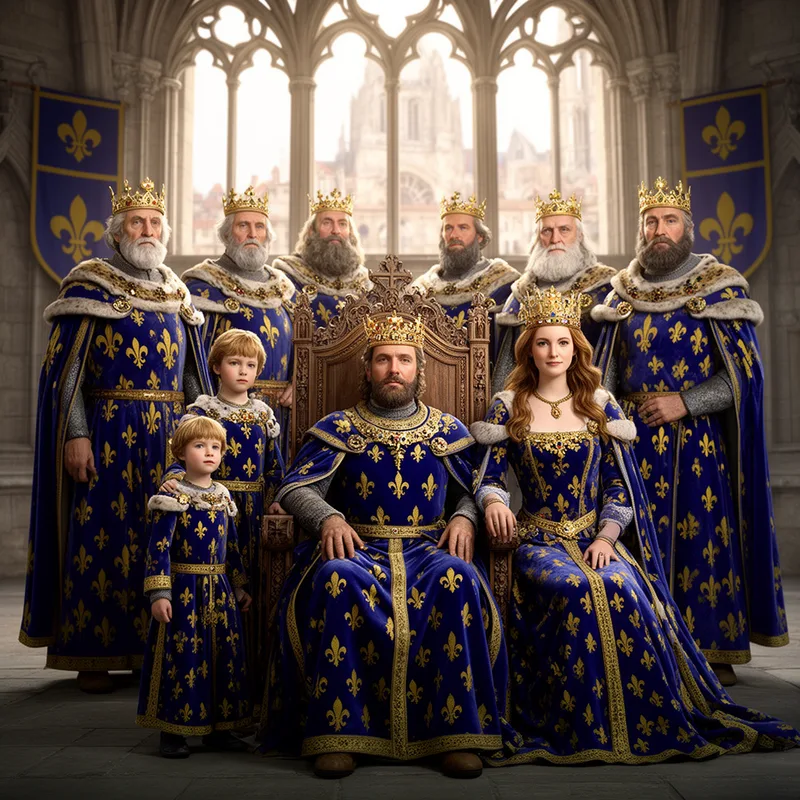
Capetian dynasty
- noun
- /kæˈpeɪʃən ˈdaɪnəsti/
- The Capetian dynasty began with Hugh Capet in 987.
Examples
-
The Capetian dynasty, founded by Hugh Capet, ruled France for more than three centuries.
-
The end of the Capetian dynasty led to a succession crisis in France.
-
Many French monarchs during the Middle Ages belonged to the Capetian dynasty.
-
The Capetian dynasty established a foundation for the modern French state.
-
Did the Capetian dynasty really last for over three centuries?
-
Kings and queens of the Capetian dynasty played a significant role in shaping French history.
-
The Capetian dynasty oversaw significant developments in medieval France, including the establishment of the French monarchy.
Surface Forms
Morphology
The adjective 'Capetian' means 'of or relating to the Capetian family' and 'dynasty' means 'a succession of leaders from one family', so the combined phrase straightforwardly denotes a succession of rulers belonging to the Capetian family. This is a transparent, compositional proper-name + noun construction that a B1 learner who knows both constituents can readily understand.
Etymology
Capetian dynasty is named after the first king, Hugh Capet, whose family kept the throne. 'Dynasty' means a family that 'rules', so the phrase refers to the royal family who ruled France from 987 to 1328.

