
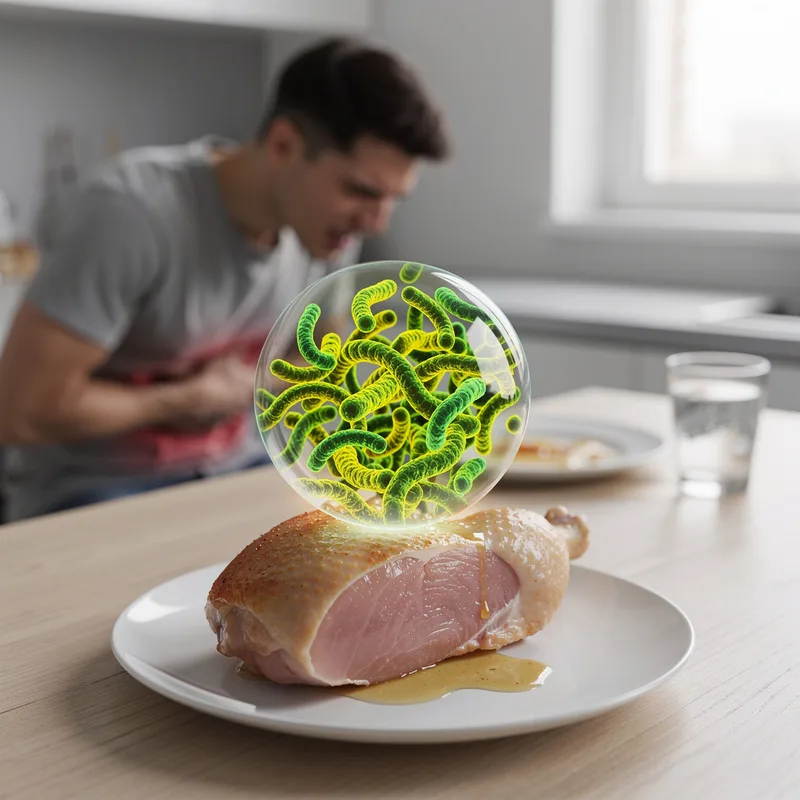
Campylobacter
 1
9.2

- proper noun
- /ˌkæm.pɪˈloʊ.bæk.tɚ/
- Specialized
- The work was done as part of an ARS cooperative program to produce effective approaches to control Campylobacter and Salmonella in on-farm poultry.
- Campylobacter jejuni
- Campylobacter and Salmonella
- Campylobacter and Listeria
Examples
-
The CDC also noted significant reductions in illnesses caused by E. coli and the pathogens Listeria, Campylobacter, Yersinia, and Salmonella.
Academic text (2006) -
After she contracted Campylobacter in August, it took her a month to recover.
-
Campylobacter was identified as the leading cause of gastroenteritis in many countries.
Academic text (2002) -
The California team, based at the Western Regional Research Center, is focusing on Campylobacter's genes.
Academic text (2004) -
Public health officials have traced this path by following the recent increase in fluoroquinolone resistance among Campylobacter jejuni in chickens and people.
Academic text (2000) -
Pathogens such as Salmonella and Campylobacter are the main causes of foodborne illness from poultry consumption.
Academic text (2004) -
Pathogens such as Salmonella and Campylobacter are the main causes of foodborne illness from poultry consumption.
-
Another pathogen, Campylobacter, can also spread from chickens to human beings with deadly results.
Surface Forms
Morphology
Etymology
Campylobacter (the genus name) comes from Greek campylos 'bent' and bakterion 'rod'. So the name means 'curved rod' and describes a group of curved bacteria that can cause food poisoning.