
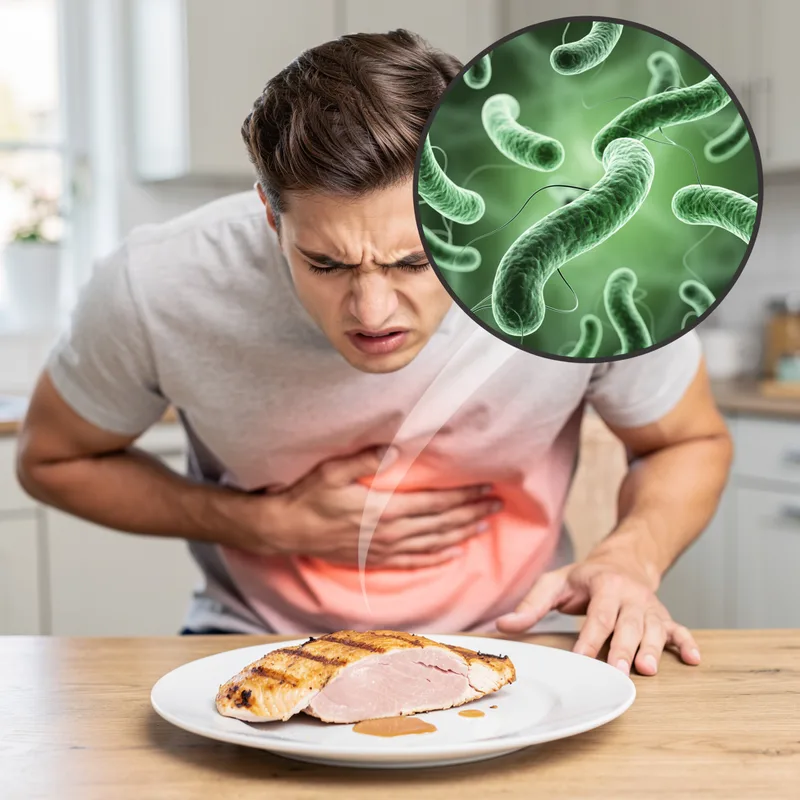
Campylobacter
 1
8.6

- noun
- /ˌkæm.pɪ.loʊˈbæktər/
- Specialized
- Infections caused by Campylobacter are often linked to the consumption of contaminated poultry.
- Campylobacter jejuni
- Campylobacter infections
Examples
-
Bloody diarrhea (dysentery) occurs more commonly with some pathogens (salmonella, shigella, and campylobacter species).
Academic text (2012) -
Health officials warn that Campylobacter is one of the leading causes of foodborne illness worldwide.
-
"Now we're focused on excluding Campylobacter from turkeys."
Academic text (2006) -
Some common causal microorganisms include Campylobacter and rotaviruses.
Academic text (2014) -
Meats, especially poultry, and raw milk have been sources of Campylobacter jejuni.
Academic text (1996) -
Second on the scientists' hit list of pathogens, Campylobacter jejuni is a major cause of human intestinal inflammation.
Academic text (1996) -
Nasty microbes called Campylobacter jejuni can live in that liquid and on the skin of fresh, uncooked poultry.
Academic text (2004) -
Campylobacter can lead to severe gastrointestinal infections, causing symptoms like diarrhea and stomach pain.
Surface Forms
Morphology
Etymology
Campylobacter comes from Greek roots campylos 'bent' and bakterion 'rod'. These words give a clear image: these are curved, rod-shaped bacteria, so remembering 'bent rod' helps link the name to the stomach infections they can cause.