

Camelus dromedarius
- noun
- Specialized
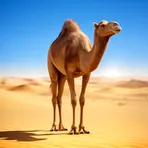
- Unlike the Bactrian camel, the Camelus dromedarius has only one hump on its back.
Examples
-
The Camelus dromedarius is well adapted to survive long periods without water in harsh desert environments.
-
Researchers study how the Camelus dromedarius copes with extreme heat and dehydration in its native habitat.
-
The Camelus dromedarius is well adapted to desert conditions.
-
Did you know that the Camelus dromedarius can survive without water for long periods?
-
Researchers study how the Camelus dromedarius copes with extreme heat and dehydration in its native habitat.
-
The Camelus dromedarius is well adapted to survive long periods without water in harsh desert environments.
-
Unlike the Bactrian camel, the Camelus dromedarius has only one hump on its back.
Synonyms
 1
8.4
1
8.4

A large camel with one hump that lives in hot deserts
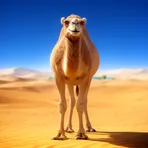
A large desert animal with a single hump that can live a long time without water
Surface Forms
Morphology
Camelus + dromedarius
This is a Latin scientific binomial: the constituent 'Camelus' signals the camel genus so a learner who recognizes that part could infer the phrase refers to a kind of camel, but 'dromedarius' is not an English word and its specific sense ('single-humped/dromedary') is not derivable from the parts by an average B1 learner. The expression therefore gives a partial clue but not the full meaning without domain or lexical knowledge.
Etymology
Camelus dromedarius comes from old Latin and Greek words: Camelus simply means camel, and dromedarius comes from a word for 'running' because these single-hump camels were used for fast travel across the desert. That's why the name points to the 'one hump' camel we now call the dromedary.