
Callitris parlatorei
- noun
- Specialized
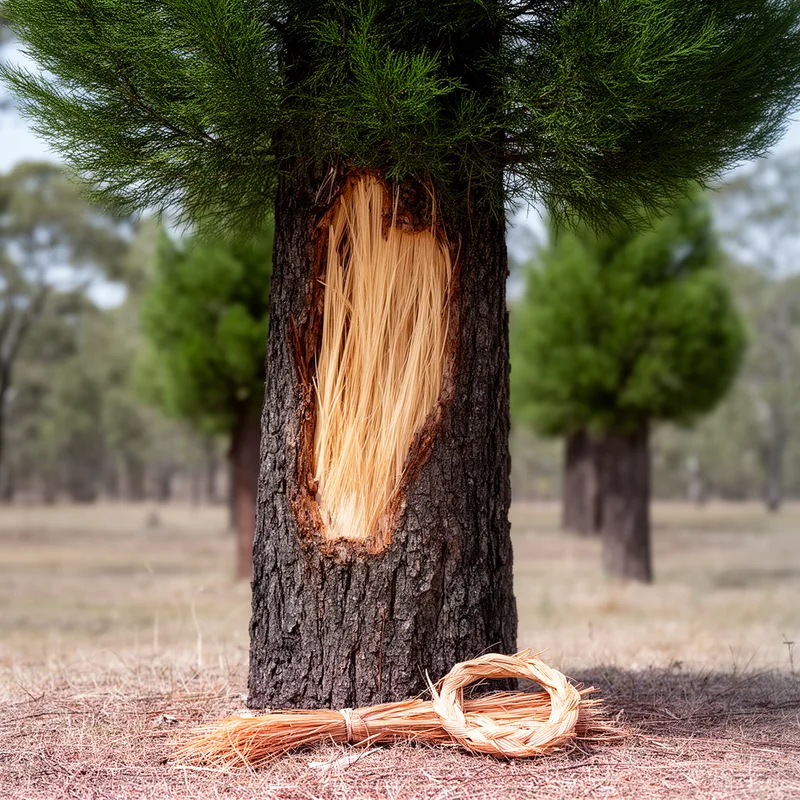
- The fibrous inner bark of Callitris parlatorei makes it useful for traditional crafts.
Examples
-
Several wildlife species depend on Callitris parlatorei for habitat in Australian woodlands.
-
Foresters monitor Callitris parlatorei populations to ensure their conservation.
-
The Callitris parlatorei is known for its unique fibrous bark.
-
Did you know that Callitris parlatorei is native to Australia?
-
Foresters monitor Callitris parlatorei populations to ensure their conservation.
-
Several wildlife species depend on Callitris parlatorei for habitat in Australian woodlands.
-
The fibrous inner bark of Callitris parlatorei makes it useful for traditional crafts.
Synonyms

A tall Australian pine tree with stringy bark used for timber
An evergreen tree or shrub from Australia that grows well in dry soil and has hard wood
Surface Forms
Morphology
Callitris + parlatorei
This is a Latin binomial: knowing 'Callitris' (a genus of evergreen trees) lets a learner infer the phrase refers to a species of that genus, but the specific epithet 'parlatorei' is a proper name/Latinized form with no lexical meaning to derive the detailed sense. Taxonomic naming is systematic across languages so the generic category is somewhat transparent, but the full, specific meaning (traits of the species) is not predictable from the parts.
Etymology
The name Callitris parlatorei may come from two parts. Callitris comes from old words for 'beautiful' and 'hair', a picture of the tree's thin, hair-like leaves, and parlatorei is 'named after' the plant scientist Parlatore who first wrote about this tree with fibrous inner bark.

