

Calendula officinalis
- noun
- Specialized
- Many gardeners plant Calendula officinalis for its cheerful yellow flowers and natural pest-repellent qualities.
Examples
-
The petals of Calendula officinalis are often used in herbal salves and teas for their soothing properties.
-
Calendula officinalis thrives best in sunny spots and well-drained soil.
-
The Calendula officinalis is often found in many gardens.
-
Many people use Calendula officinalis for its healing properties.
-
Many gardeners plant Calendula officinalis for its cheerful yellow flowers and natural pest-repellent qualities.
-
The petals of Calendula officinalis are often used in herbal salves and teas for their soothing properties.
-
Calendula officinalis thrives best in sunny spots and well-drained soil.
Synonyms

 1
7.5
1
7.5

A small plant with bright yellow or orange flowers used in medicine and food
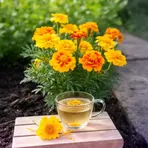
A plant with bright yellow or orange flowers often grown in gardens and used in herbal teas

A common garden plant with bright yellow or orange flowers
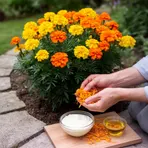
A garden plant with bright yellow or orange flowers that people use for skin care

A small garden flower with bright orange or yellow petals that blooms in summer

A marigold plant used to decorate gardens and make simple medicine
Surface Forms
Morphology
This is a straightforward botanical binomial: 'Calendula' names the flowering plant and 'officinalis' explicitly denotes a plant with recognised medicinal use. A learner who knows both constituent meanings can directly infer that Calendula officinalis is the medicinal/common marigold species, so the meaning is compositional and predictable rather than idiomatic.
Etymology
Calendula officinalis may come from Latin: Calendula comes from the word 'calends', the 'first day of the month', because the flowers open often and the plant blooms for many months, and officinalis was a label for plants sold in old medicine shops. So the name explains why this common marigold was used for 'medicine' and prized for its long flowering.