
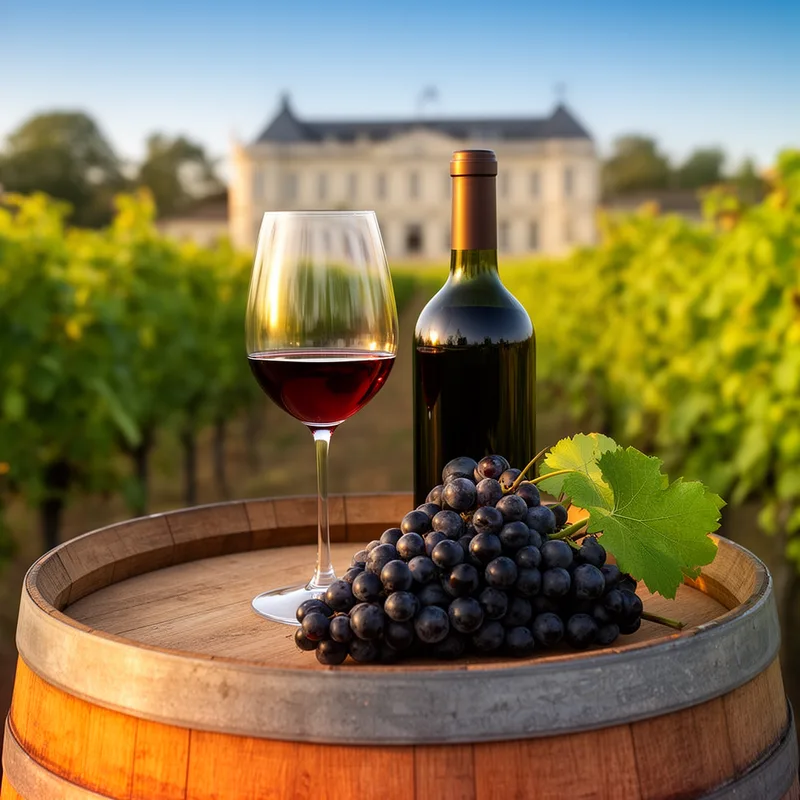
Cabernet Sauvignon
 4
4.7
4
4.7

- noun
- /ˈkæbərneɪ soʊvɪnˈjɔːn/
- One example was the Casa Real Cabernet Sauvignon from Santa Rita.
- Cabernet Sauvignon and Merlot
- Cabernet Sauvignon and Chardonnay
- hectarage of Cabernet Sauvignon
Loading YouTube…
Watch on YouTubeMerlot, Pinot Noir or Cabernet Sauvignon.
- Merlot, Pinot Noir or Cabernet Sauvignon.
Examples
-
Equally important, an in-your-face Cabernet Sauvignon lacks finesse and will smother your food.
Blog text (4) -
Briefly on the wines: Don Melchor is a Chilean Cabernet Sauvignon, a rich and complex wine with loads of fruit flavors.
Blog text (29) -
Cabernet Sauvignon was king when I first started drinking Chilean wines some 20 years ago.
Blog text (21) -
For our heavier beef courses to follow, we ordered up a bottle of the Warwick "First Lady" Cabernet Sauvignon 2009, South Africa, $43.
Blog text (9) -
Fuse Cabernet Sauvignon 2010, Napa Valley, does not disappoint in those aspects.
Blog text (30) -
Most wine-drinking folks I know rifled through bottles of $6 or so Cabernet Sauvignon looking for gems; we found quite a few.
Blog text (21) -
In 1975, the hectarage of Cabernet Sauvignon in California equaled that in Bordeaux in 1968.
Academic text (1993) -
In Italy, growers have planted Cabernet Sauvignon and Chardonnay in generally small amounts in hundreds of vineyards, especially in the northern part of the country.
Academic text (1993) -
What do you get when you mix 68% Cabernet Sauvignon, 16% Petit Verdot, 13% Merlot, and 3% Malbec?
Blog text (11) -
Can I please have another glass of Cabernet Sauvignon with my dinner?
Synonyms
 62
1.0
62
1.0
Wine made from dark grapes with the skins left on during making
 8
6.3
8
6.3
A red wine often strong and good with steak

A dark red grape used to make strong red wine
How Full-bodied

Surface Forms
Morphology
The phrase is a conventional varietal name rather than a compositional phrase, but both constituents are grape/wine-related terms so a learner who knows those parts could plausibly infer it denotes a type of grape or wine. The meaning is partly predictable (a wine/grape variety) and the same label appears across many languages, yet the precise status as a specific Bordeaux varietal is lexicalized and not fully derivable, so it is not fully transparent.
Etymology
The name Cabernet Sauvignon joins two grape names, Cabernet and Sauvignon, because the wine comes from those grapes. One popular story says 'sauvignon' comes from a French word for 'wild', so the second part once meant a wild vine. That's why Cabernet Sauvignon now names the dark 'grape' and the red 'wine' made from it.