
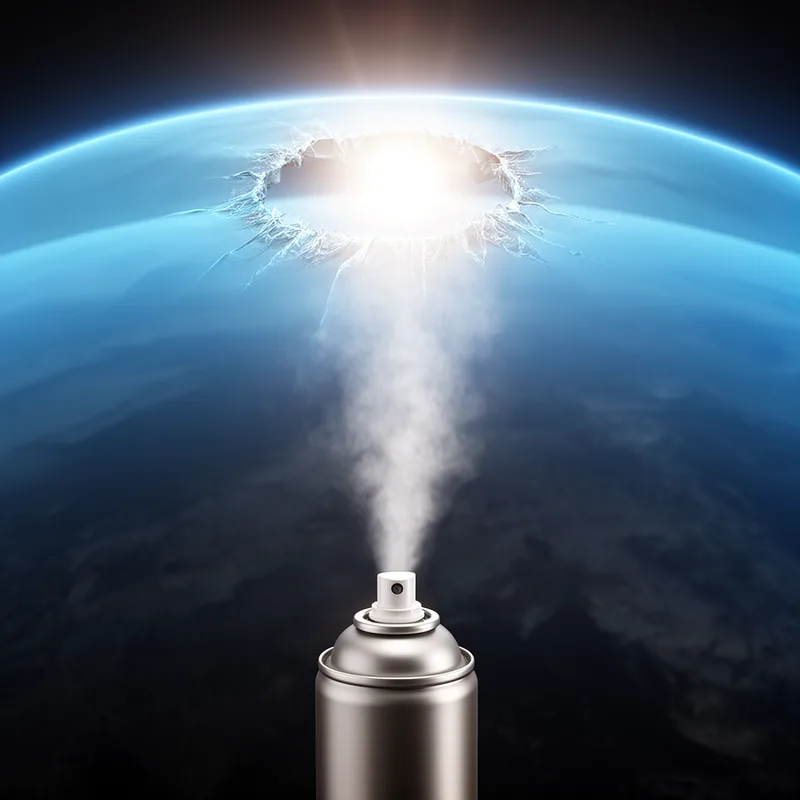
CFC
 10
4.2
10
4.2

- noun
- /ˌsiːˌɛfˈsiː/
- Specialized
- Moreover, industry continues to add CFCs to the atmosphere at a rate of five to ten percent per year.
- chlorofluorocarbon (CFC)
- CFC use
- CFC production
Loading YouTube…
Watch on YouTubeThis group of chemicals is called chlorofluorocarbons, CFCS for short.
- This group of chemicals is called chlorofluorocarbons, CFCS for short.
- And then we talked about a chemistry problem, CFCS, and we talked about how those were destroying the ozone layer of this planet.
- What did CFCS and what did all the new stuff, the three on and things to put in fridges fix what was there before?
Examples
-
Laboratories around the country are investigating products that will limit the impact of CFCs and halons on the ozone layer.
Academic text (1992) -
Hawaii has restricted the sale of air-conditioning refrigerants containing CFCs and requires air-conditioner repair shops to use machines that recycle CFCs.
Academic text (1991) -
I am old enough to remember the devastating effects of the CFC phase-out where automotive AC is concerned.
Blog text (3) -
Thus, millions of tons of previously produced CFCs are already en route to the stratosphere.
Academic text (1991) -
Many vehicles also use chlorofluorocarbons (CFCs), which are released when cars are destroyed.
Academic text (1990) -
The major source of atmospheric CFC-11 and CFC-12 is the aerosol spray can, which uses these chemically inert gases as propellants.
Academic text (1992) -
Car air conditioners are a big source of CFCs that leak into the atmosphere.
-
Once in the stratosphere, a single CFC molecule can destroy more than 100,000 ozone molecules.
-
When they get into the upper atmosphere, CFCs destroy the ozone that protects us from ultraviolet radiation.
Synonyms
 8
6.5
8
6.5
A man-made chemical used to cool air or push spray from cans
A gas used in old fridges and spray cans that damages the ozone layer
How Ozone-Damaging

Surface Forms
Morphology
CFC = chlorofluorocarbon (semi-transparent) = C + F + C
CFC is an initialism of a technical compound name; the form is clearly derived but comprehension requires domain knowledge of chemistry.
Etymology
CFC is a short name made from the first letters of the chemical parts chloro ('chlorine'), fluoro ('fluorine') and carbon, so it names gases made of carbon, chlorine and fluorine. These CFC gases were used in fridges and spray cans but damage the ozone layer, which is why they were banned in many countries.