
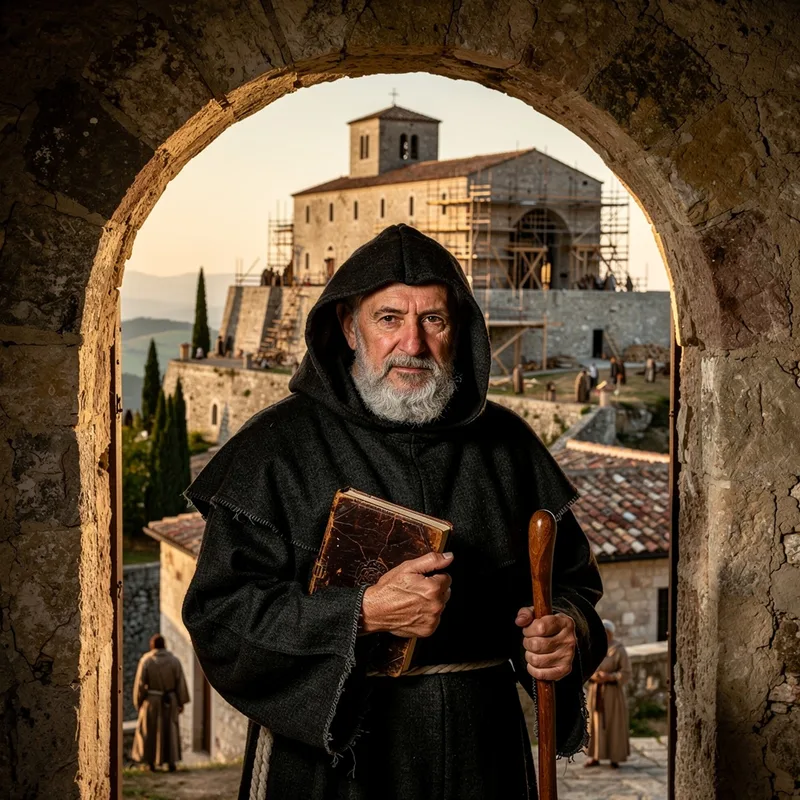
Benedict
 106
8.1
106
8.1

- proper noun
- /ˈbɛnɪdɪkt/
- Welcome to St. Benedict's.
- Saint Benedict
- Rule of Saint Benedict
- Benedict window
Loading YouTube…
Watch on YouTubeSo throughout Benedict and Monasticism, they're reading John Cassian.
- So throughout Benedict and Monasticism, they're reading John Cassian.
- So remember in the Miracle of Saint Benedict Seston, we did a lot of talking about the stone that is the masculine stone.
Examples
-
So one of the very important people in the Benedict order.
-
I had to raise my hand a long time before Sister Mary Benedict noticed me.
Fiction book (1993) -
So the Rule of think Benedict is a manual for the monastic life, how to set up and run a monastery.
-
Mary Ellen Benedict is an emeritus distinguished teaching professor at Bowling Green State University.
Academic text (2017) -
In the 18th century, Pope Benedict XIV laid out a procedure to determine the veracity of a miracle.
-
The cantor (singing leader) was first mentioned in the Rule of St. Benedict (ca. 520).
Academic text (1999) -
In 540 CE, Saint Benedict founded the Benedictine order, establishing a new approach to monastic life.
-
The teachings of Benedict greatly influenced Western Christian monasticism and continue to shape religious practices today.
-
Saint Benedict is revered for his Rule, which emphasizes community living and commitment to spiritual growth.
Synonyms

An Italian monk many see as the founder of Western life in monasteries and the order named after him

An Italian Christian monk who founded the Benedictine order and wrote rules for monks
Compounds


A group of Roman Catholic monks who follow Saint Benedict's rules to pray and study
Surface Forms
Etymology
Benedict comes from the Latin benedictus, which means 'blessed' and is made from bene 'well' and dicere 'to speak'. So the name fits Saint Benedict, who was seen as a 'blessed' or holy man.