
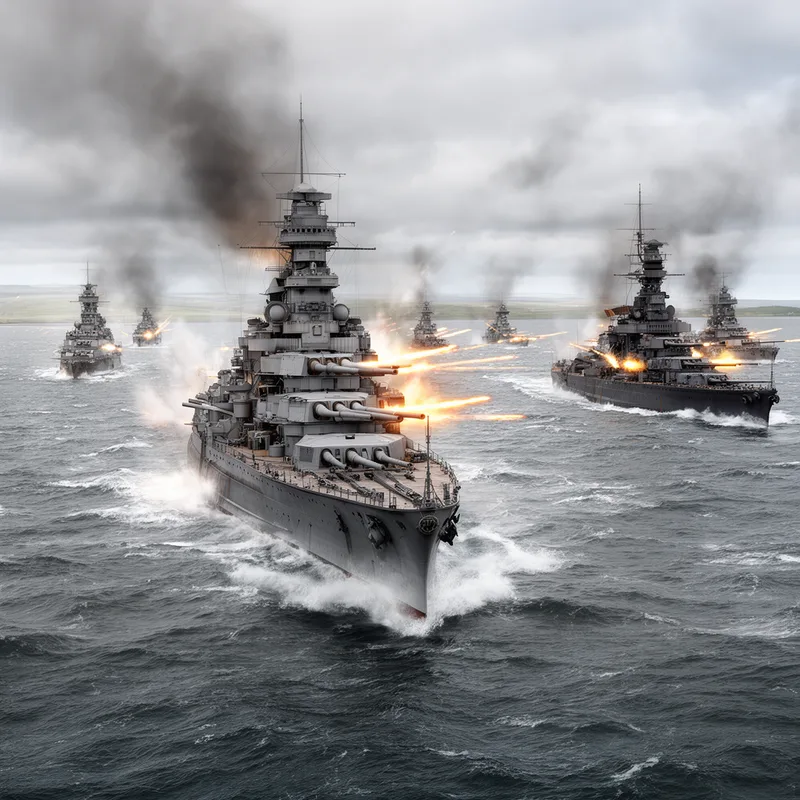
Battle of Jutland


 1
8.7
- proper noun
- Britain's vast naval fleet spent most of the war tied up to the quays, waiting for the inferior German fleet to come out and fight; when the latter finally did so, the result was the inconclusive Battle of Jutland, after which both fleets sat out the rest of the war in port.
Examples
-
The Royal Navy would not face a serious challenge at sea until the Battle of Jutland more than a century later.
-
The Battle of Jutland was a pivotal naval confrontation that took place in May 1916 between British and German forces.
-
During the Battle of Jutland, the British Navy faced significant losses, leading to discussions about naval strategies.
-
Historians often analyze the Battle of Jutland to understand its impact on naval warfare during World War I.
Synonyms
 1
8.4
A major 1916 sea battle between British and German fleets off Denmark with no clear winner
Surface Forms
Morphology
The phrase is a straightforward place-name construction: 'battle' + 'of' + 'Jutland' conveys a battle that took place at Jutland, so a learner who knows the constituents will infer it denotes a specific battle there. While detailed historical facts (e.g. it was a major WWI naval engagement in 1916) are not recoverable from the phrase, the basic referential meaning is fully compositional and cross-linguistically common.
Etymology
Battle of Jutland takes its name from the place it happened — the sea off Jutland in Denmark, where British and German ships fought in 1916. It was a huge World War I sea fight with many ships but 'no clear winner', so the name now refers to a major but 'indecisive' sea battle.