
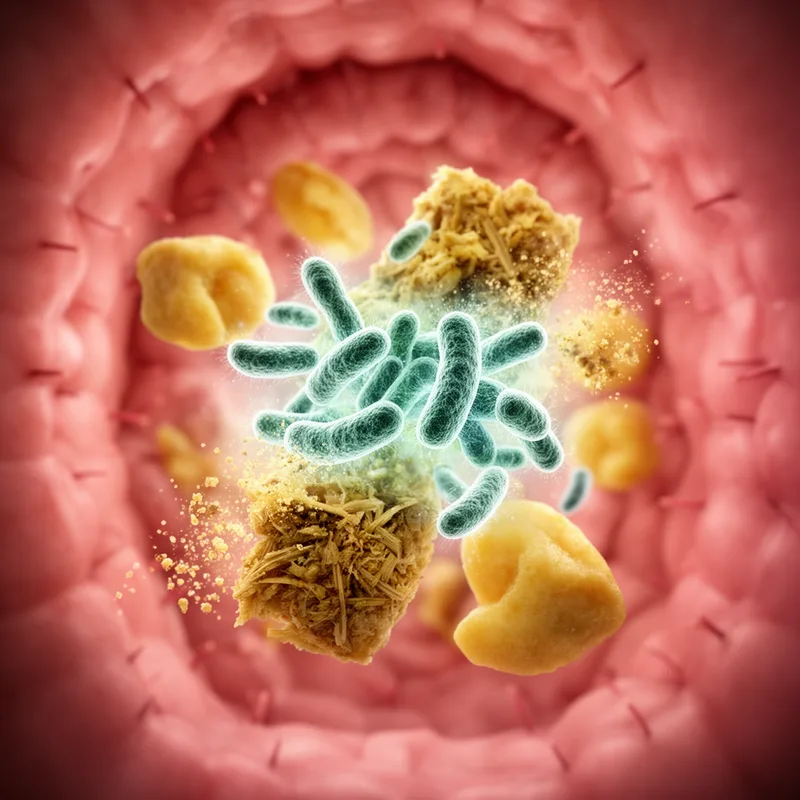
Bacteroides


 1
9.7
- noun
- /bækˈtɪəˌriːdz/
- Specialized
- Additionally, Bacteroides fragilis has been reported as the most common organism in patients with lateral sinus thrombosis secondary to cholesteatoma.
- Bacteroides fragilis
Examples
-
An RDA analysis at the species level revealed that OTU7 (Bacteroides spec.) correlated with levels of hyperactivity and impulsivity (Fig 4).
Academic text (2018) -
We found Neisseria and Bacteroides species as possible ADHD-associated biomarkers.
Academic text (2018) -
We suggest that the genus Neisseria and elevated levels of Bacteroides spec. are associated with juvenile ADHD.
Academic text (2018) -
The LEfSe analysis revealed two Bacteroides species (OTU7 and OTU577) as potential biomarkers for the ADHD group.
Academic text (2018) -
Although our method did not allow the determination of the particular species within Neisseria and Bacteroides, there are well-known pathogens in these genera that might be involved in ADHD pathogenesis.
Academic text (2018) -
With regard to receptor blockade, it has been shown that treating mouse peritoneum with glycocalyx polysaccharides will prevent Bacteroides fragilis from forming a biofilm.
Academic text (2002) -
Streptococci or staphylococci in combination with anaerobic oral flora such as Peptostreptococcus or Bacteroides species are the most prevalent pathogens in necrotizing fasciitis.
Academic text (2004) -
The bacteria Bacteroides are important components of the intestinal microbiome that help in digestion.
-
Research indicates that certain Bacteroides species can influence the immune response in the gut.
-
Bacteroides thetaiotaomicron is often studied for its role in human gut health and disease prevention.
Synonyms
 1
8.5
A group of bacteria that live in the human and animal gut and help the body break down food
Compounds
- Specialized
1
8.5
A group of bacteria that live in the human and animal gut and help the body break down food
Surface Forms
Etymology
Bacteroides comes from the Greek parts bakterion 'rod' and -oides 'like'. So Bacteroides means 'rod-like', which fits these stick-shaped bacteria found in the gut and shows its link to the common word bacteria.