
Aurignacian


 1
9.9
- adjective
- /ɔːˈrɪnˌkeɪʃən/
- Specialized
- Archaeologists have unearthed stunning examples of Aurignacian art that showcase the creativity of prehistoric peoples.
- Aurignacian people
Examples
-
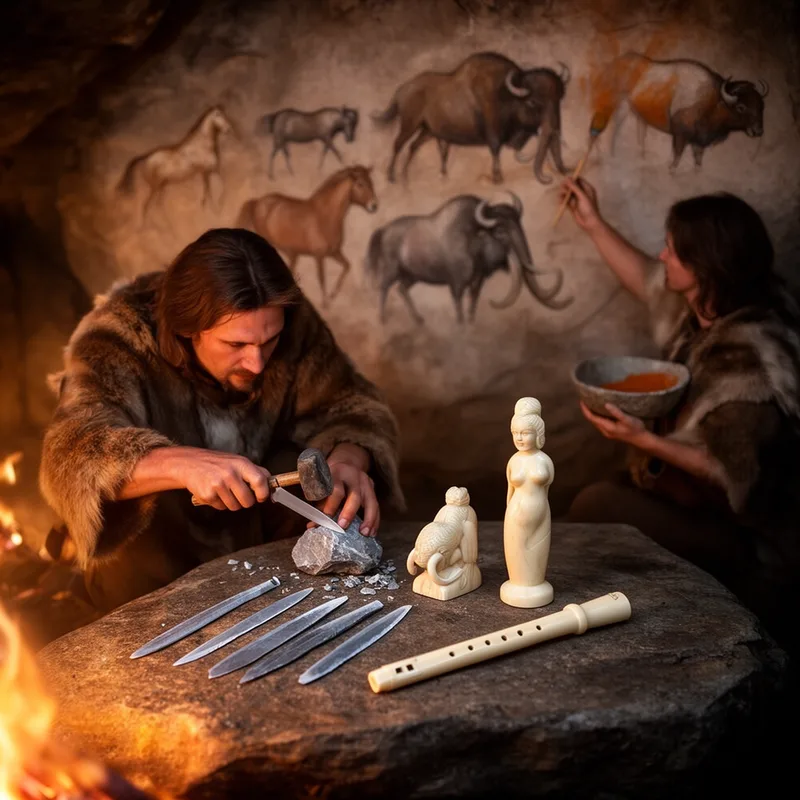
Perhaps the most unexpected object that has survived from Aurignacian times is a flute from the site of Isturitz in southwestern France.
Academic text (1994) -
Techniques for producing Aurignacian ivory and stone beads varied from one European region to the next.
Academic text (1994) -
The several dozen Aurignacian engraved blocks that have been discovered are difficult to interpret.
Academic text (1994) -
The pipes were found in excavation levels associated with Europe's earliest modern human population, the Aurignacian culture.
Academic text (2008) -
"We report the discovery of bone and ivory flutes from the early Aurignacian period of southwestern Germany."
Blog text (17) -
Conard says the timing of the Aurignacian and Gravettian artifacts found in the Swabian caves immediately leapt out at him.
Academic text (2007) -
The paintings were all done in black, brown, red, and yellow ochers, ground from powder and mixed with animal fat, and are thought to date from the late Aurignacian period, circa 15,000 B.C.
Fiction book (1994) -
It is an exploration of what the science of archaeology is revealing about the Aurignacian people—Europe's first artists—and the origins of the modern human mind.
Academic text (2011) -
The Aurignacian period is known for its remarkable tools and cave art created by early modern humans.
-
The Aurignacian culture played a crucial role in the development of human artistic expression during the Upper Paleolithic.
Surface Forms
Morphology
Aurignacian = Aurignac (opaque) = Aurignac + ian
Formally formed from the place-name 'Aurignac' + the adjectival suffix '-ian'; the toponym is obscure and the term denotes a specialist archaeological culture, so knowing the parts won't help a typical B1 learner.
Etymology
Aurignacian comes from the French village Aurignac and the ending -ian, which means 'from' or 'related to', like Canadian. So Aurignacian describes something that comes from or is connected to that early human culture, such as tools or art.