
Aruru
- proper noun
- Literature
- Many rituals were dedicated to Aruru, seeking her blessings for fertility and growth.
Examples
-
The ancient people worshipped Aruru as the earth goddess who nurtured their crops.
-
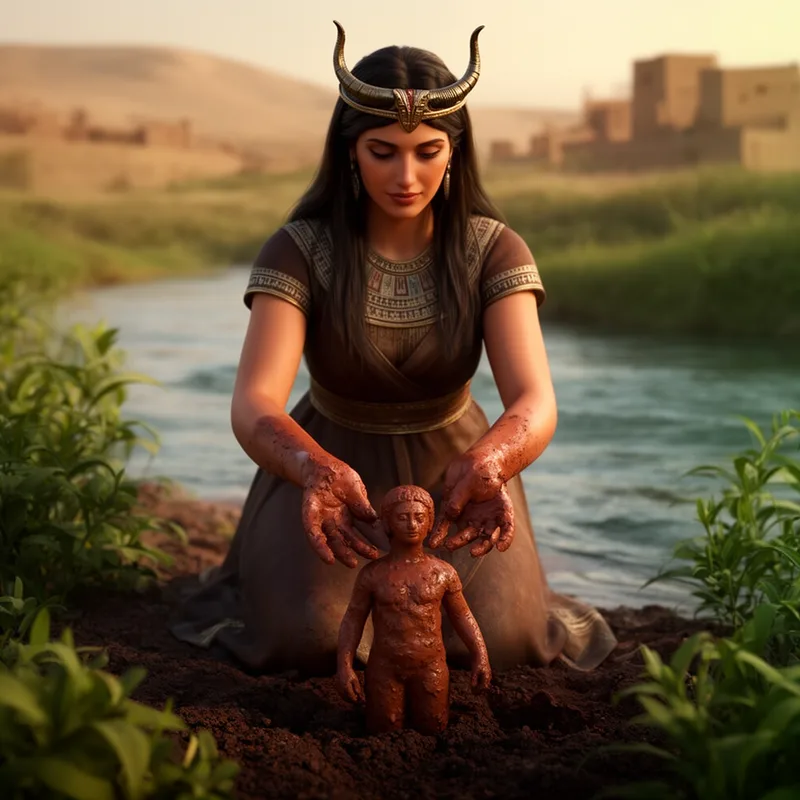
In the Epic of Gilgamesh, the goddess Aruru is portrayed as the mother of all living things.
-
To tame Gilgamesh, the goddess Aruru created a rival called Nkidu.
Synonyms

 5
9.9
5
9.9

A Sumerian goddess who is the earth and brings fertility

An ancient Sumerian mother goddess who helps plants and people grow and is linked to mountains

A mother goddess in ancient Sumerian stories who is mother to gods and humans

A mother goddess of ancient Mesopotamia who people worship for birth and life

A goddess from ancient Mesopotamia who protects women during childbirth and helps people have babies
Surface Forms
Etymology
Aruru is a name from ancient Mesopotamia for a mother and earth goddess in old Sumerian stories, often linked with other mother figures like Ki. She is famous for making humans from clay, so thinking of Aruru as a 'mother' and a 'creator' helps explain why she stands for birth, fertility, and the land.