
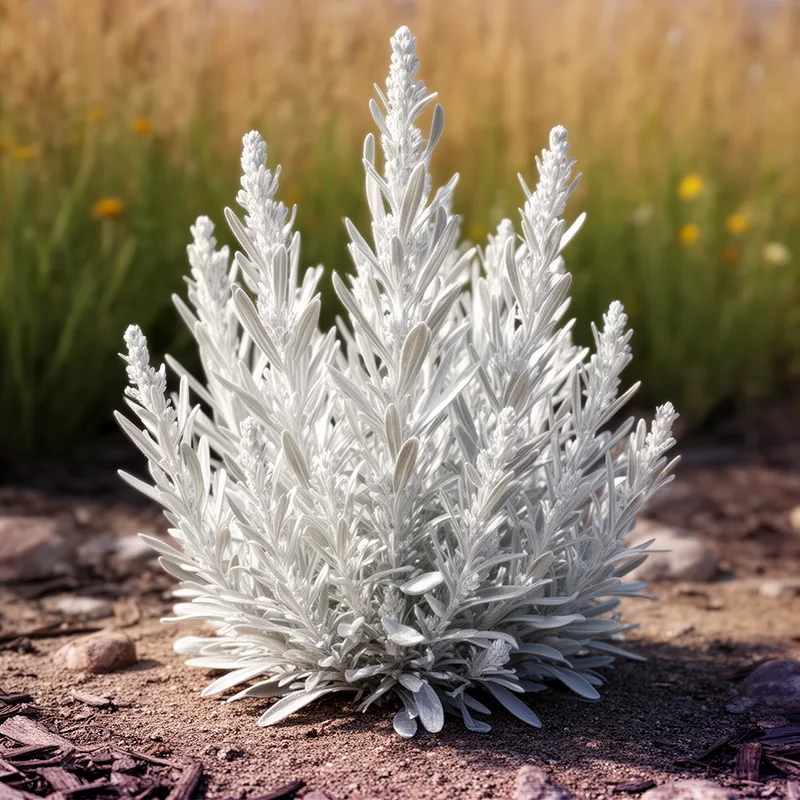
Artemisia ludoviciana
- noun
- /ˌɑːrtəˈmɪziə luˌdoʊvɪˈsiːənə/
- Specialized
- The cottony texture of Artemisia ludoviciana makes it easily recognizable among native prairie plants.
Examples
-
Artemisia ludoviciana is often used in landscaping for its drought tolerance and attractive silver leaves.
-
Indigenous peoples have traditionally used Artemisia ludoviciana for medicinal purposes.
-
Artemisia ludoviciana is often used in herbal medicine.
-
Many people enjoy the scent of Artemisia ludoviciana in their gardens.
-
Artemisia ludoviciana is a popular choice for gardeners seeking drought-resistant plants with striking silver foliage.
-
Indigenous communities have valued Artemisia ludoviciana for its traditional medicinal uses throughout history.
-
In the wild, Artemisia ludoviciana can be found thriving in sunny, dry areas with poor soil.
Synonyms

A plant that lives for many years with soft white leaves and grows in the US Southwest
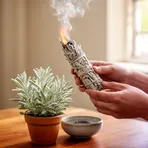
A plant with silvery white leaves that people often burn in rituals for healing
Surface Forms
Morphology
Artemisia + ludoviciana
This is a Latin binomial: a B1 learner who knows 'Artemisia' as a plant genus can infer that 'Artemisia ludoviciana' names a specific species of Artemisia (i.e., a kind of that plant). However, the specific epithet 'ludoviciana' is a non‑transparent Latin/technical element that does not convey the common name or properties (e.g., 'white sage'), so the full meaning is not directly derivable from everyday English vocabulary.
Etymology
Artemisia ludoviciana gets its name from two parts: Artemisia, linked to the Greek goddess Artemis who was connected with wild plants and healing, and ludoviciana, an old Latin way to say 'from Louisiana' or 'of Louis'. So the name shows the plant's herb group and hints at the region where it was first noted.

