
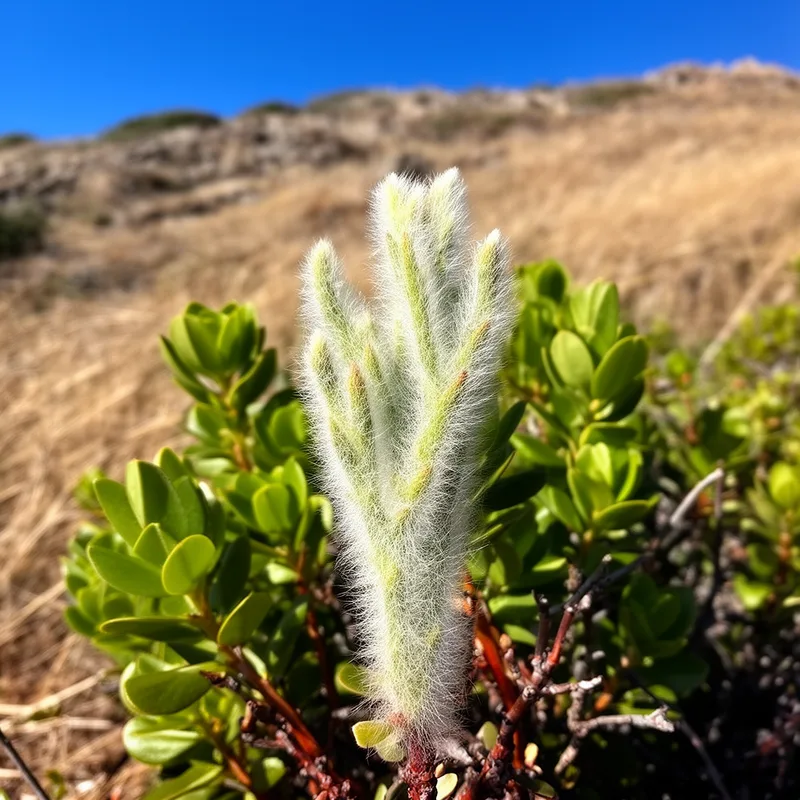
Arctostaphylos tomentosa
- noun
- Specialized
- Botanists often study Arctostaphylos tomentosa for its unique woolly-haired twigs and adaptability.
Examples
-
Botanists studied the woolly stems of Arctostaphylos tomentosa for their unique adaptation.
-
The Arctostaphylos tomentosa shrub thrives on the coastal hills of California.
-
Many gardens feature Arctostaphylos tomentosa because of its drought resistance and attractive foliage.
-
The Arctostaphylos tomentosa thrives in California's coastal regions.
-
Many gardeners appreciate the Arctostaphylos tomentosa for its unique appearance.
-
Many gardens feature Arctostaphylos tomentosa because it is drought-resistant and visually appealing.
-
The Arctostaphylos tomentosa shrub grows abundantly in the coastal areas of California.
Synonyms
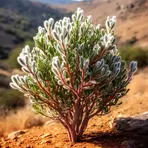
An upright California bush with young twigs covered in fuzzy hairs

A shrub native to California that grows upright with open branches and soft, hairy young twigs
Surface Forms
Morphology
Arctostaphylos + tomentosa
The name is compositional: it pairs a genus name (Arctostaphylos, a shrub) with a descriptive Latin epithet (tomentosa, from tomentose = covered with woolly hairs), so a speaker who knows both constituents could derive the meaning. However, the epithet is a specialized Latin botanical form not found in common dictionaries and the whole construction is technical, so an average B1 learner would not reliably infer the meaning without prior exposure.
Etymology
The plant name Arctostaphylos tomentosa comes from Greek and Latin words: Arctostaphylos mixes 'bear' and 'bunch of grapes' and tomentosa means 'woolly'. Imagine a low shrub with soft, woolly twigs and berry-like fruits a bear might eat, and you can see why the name describes this woolly California shrub.

