
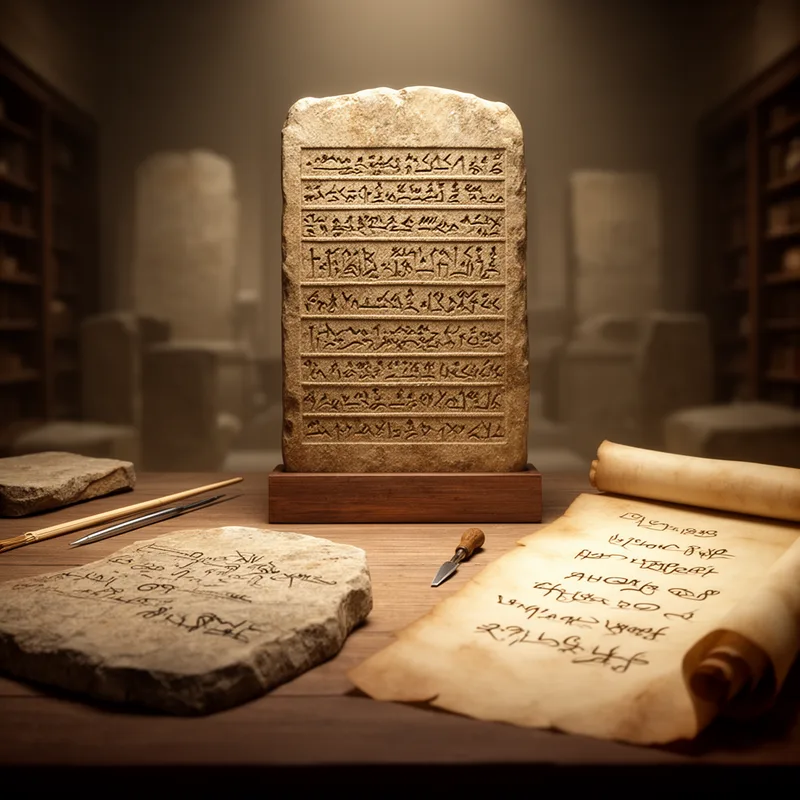
Aramaic
 1
9.4
1
9.4

- noun
- /ˌærəˈmeɪɪk/
- The ancient text was inscribed in Aramaic, showcasing its historical significance.
Examples
-
Well, I find it odd that in 20 minutes, a 17-year-old girl could transcribe thirty pages of written text into aramaic.
-
He immediately recognized it to be a crude forgery, haphazardly combining ninth-century Hebrew letter forms with seventh-century Aramaic and Moabite.
Academic text (2003) -
Many religious documents were originally written in Aramaic before being translated into other languages.
-
This inscription is a remarkable example of Aramaic script from the 9th century BC.
Synonyms


 1
9.8
1
9.8
An ancient alphabet used to write Aramaic that influenced many later scripts
Compounds
- Specialized
1
9.8
An ancient alphabet used to write Aramaic that influenced many later scripts

- Specialized
A form of Aramaic used in parts of the Hebrew Bible and spoken in ancient Palestine

A modern form of Aramaic spoken by Assyrian people in northern Iraq and nearby areas

A language from the Middle East once spoken by ancient Arameans and still used by some people
Surface Forms
Morphology
Etymology
Aramaic used for the script also comes from Aram, because the 'letters' were first used to write the Aramaic language, and that writing style later became the base for other alphabets such as the Hebrew script.